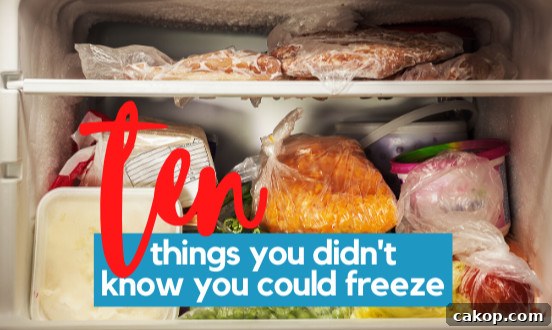
Did you know there are many everyday items you can keep longer by freezing them? Below are 10 things you may not have realized you can freeze to save money, reduce waste, and always have ingredients on hand.
When you spot a good sale, add these freezer-friendly items to your stockpile list. With a little prep and the right storage—freezer bags, airtight containers, or vacuum-seal bags—you can extend the life of many perishable foods without sacrificing quality.
10 Things You Didn’t Know You Could Freeze
Cheese: Cheese freezes well if prepared properly. Shredded cheese freezes and thaws in the refrigerator with minimal change in texture, making it convenient for cooking. Blocks can be frozen too, though very firm cheeses may crumble when grated after thawing. To avoid that, shred before freezing or plan to use thawed blocks for slicing or cubing. For sandwich slices, separate layers with wax paper so they peel apart easily after thawing.
Eggs: Raw eggs should be cracked and beaten, then stored in containers, freezer-safe bags, or ice-cube trays for portioning. Cooked eggs can also be frozen, but they require gentle reheating to avoid becoming rubbery—reheat slowly and at low power, especially for scrambled or folded egg dishes.
Rice: Cooked rice freezes excellently in portioned containers. When reheating, add a splash of water or broth and heat until steaming to revive a fluffy texture. Frozen rice is perfect for casseroles, quick stir-fries, or a last-minute side dish.
Tomatoes: Fresh tomatoes freeze well for cooking use. While they won’t hold up for sandwiches after thawing, chopped or sliced frozen tomatoes are ideal for soups, stews, chilis, and sauces. You can also puree and freeze tomato sauce, cook down a paste, or prepare batches of salsa to freeze for later.
Muffins and Baked Goods: Homemade or store-bought muffins, breads, rolls, cakes, pancakes, and waffles freeze very well. Freeze in single portions or family-sized batches to create convenient grab-and-go breakfasts or to supplement future meals. Wrap tightly or use freezer-safe containers to prevent freezer burn.
Herbs: Fresh herbs can be chopped and combined with clarified butter, oil, or water, then frozen in ice-cube trays. Once solid, transfer cubes to freezer bags. Herb cubes are an easy, flavor-packed addition to soups, sauces, and sautés.
Mashed Potatoes: Make large batches of mashed potatoes and portion them into containers or bags for freezing. Reheat gently with a little milk and butter to restore creaminess and flavor. This method saves time and makes comfort food easy on busy nights.
Sandwiches: Certain sandwiches freeze well, especially those without lettuce, tomato, or wet condiments. Peanut butter and jelly, luncheon meat, cheese, or cooked fillings like tuna or chicken salad (with minimal mayo) can be frozen for quick lunches. Wrap tightly to avoid sogginess and add fresh produce when ready to eat.
Milk: Milk freezes well if you leave some headspace in the container for expansion. Label the container with the freeze date and use thawed milk within about seven days for best quality. Shake or stir well after thawing, as separation can occur.
Chips and Crackers: Surprisingly, many chips and crackers keep longer in the freezer and can retain or even enhance their crispness when served straight from the freezer. Store them in airtight bags or containers to prevent moisture and flavor loss.
These items are all practical to buy on sale and stash in the freezer. With simple preparation and proper storage, you can stretch your grocery budget and cut food waste.
Other Frugal Tips to Check Out
- 60 Ways to Save Money
- How to Fund Travel by Living Frugally
- 100 Free or Frugal Christmas Gifts for Kids
- 50 Uses for Baking Soda
- How to Vacuum Seal Meat 101
- 7 Hacks for Cleaning and Organizing Your Fridge and Freezer