Purple hyssop was a new addition to our garden last year, and it has quickly become a favorite. It blooms later in the season, which is perfect because many of the early-blooming plants are beginning to fade while the hyssop comes into its own. Its lavender-purple spikes add a fresh, late-season burst of color and attract pollinators when other nectar sources are dwindling.
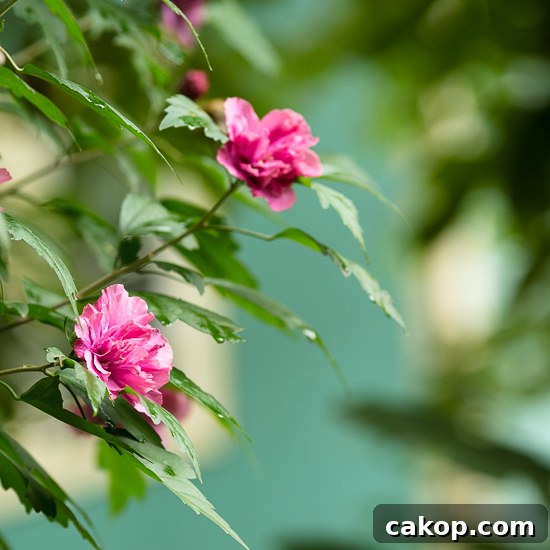
The Rose of Sharon shrubs are also late bloomers, relatively speaking, and we use them to create a relaxed hedgerow along both sides of our backyard. These tall, multi-stemmed shrubs provide vertical interest and a succession of blooms that extend the garden’s season. Their blooms appear after some of the spring and summer perennials have finished, so they help maintain color and structure well into the fall.
Sedum ‘Autumn Joy’ is another favorite that’s about to take center stage. This hardy succulent perennial is reliable and requires little fuss; its fleshy leaves and sturdy stems support dense clusters of tiny flowers that mature into large, rosy flower heads. As the season progresses the blooms deepen in color, offering late-season nectar for bees and other pollinators. You can see some fading daylilies nearby, a reminder of how one plant’s decline makes room for another’s display.
I should note that I’m focusing on individual flowers and small groupings rather than full bed shots. The truth is, the beds themselves are a bit overrun with weeds right now. I prefer to show the plants at their best, so you’ll find close-up looks and single-plant portraits rather than wide-angle views of the entire garden. That way the beauty of each plant is clearer, without the distraction of untidy borders or rampant volunteer plants.
Late-season bloomers like purple hyssop, Rose of Sharon, and Sedum ‘Autumn Joy’ are invaluable in a garden because they extend interest and support wildlife when other plants are done flowering. Staggering bloom times—from spring bulbs and early perennials to these autumn performers—ensures continuous color and seasonal variety. It also gives gardeners opportunities to enjoy different textures and forms as the year moves toward cooler weather.
Even if parts of a garden need more attention than I’d like to admit, focusing on resilient, low-maintenance perennials helps maintain a presentable and wildlife-friendly space. Hyssop and sedum are drought-tolerant and require minimal care once established, while Rose of Sharon makes a dependable backdrop with little pruning beyond occasional shaping. Together they provide a balanced combination of vertical structure, mid-height color, and late-season interest.
Rather than hiding the garden’s imperfections, these late-blooming plants encourage planning for extended season interest. If you’re looking to add late-season color with minimal fuss, consider planting a mix of sturdy perennials and shrubs that peak after the main growing months. This approach keeps the garden attractive later into the year and offers continued habitat for pollinators preparing for cooler weather.
In short, I’m enjoying the new purple hyssop and watching Sedum ‘Autumn Joy’ prepare to shine, while the Rose of Sharon provides a steady, flowering framework. Despite a few neglected beds and stubborn weeds, the garden’s late-season performers are doing exactly what I hoped: extending blooms, drawing pollinators, and giving the backyard renewed life as summer moves toward fall.