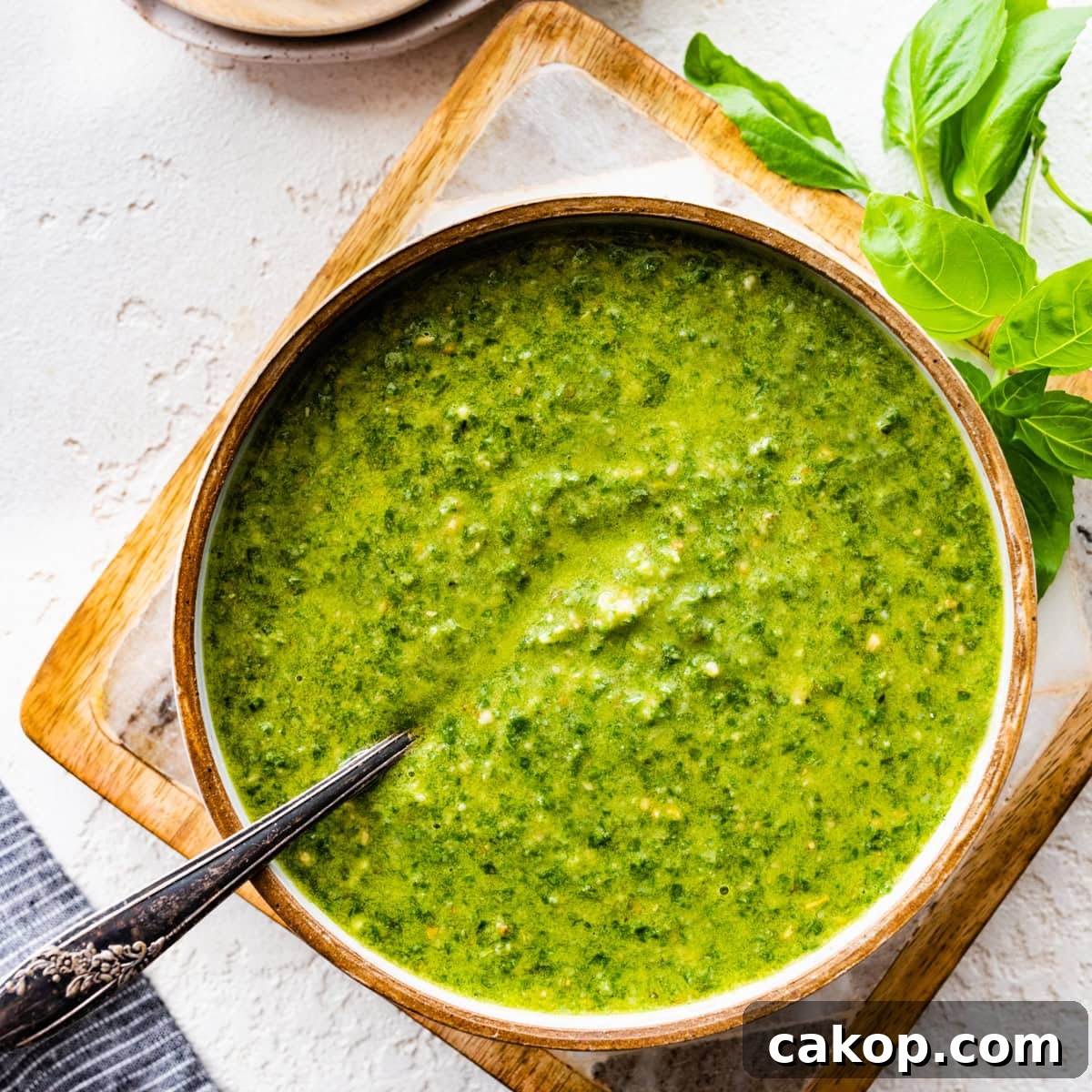
Pesto Genovese (Basil Pesto) is bright, fresh, and bursting with authentic basil flavor. From my family’s kitchen in Italy, this classic sauce comes together in minutes—perfect for tossing with pasta, spreading on bread, or spooning over roasted vegetables and grilled meats.
Try a variation on the classic: Arugula Walnut Pesto or Pistachio Pesto for a delicious twist.
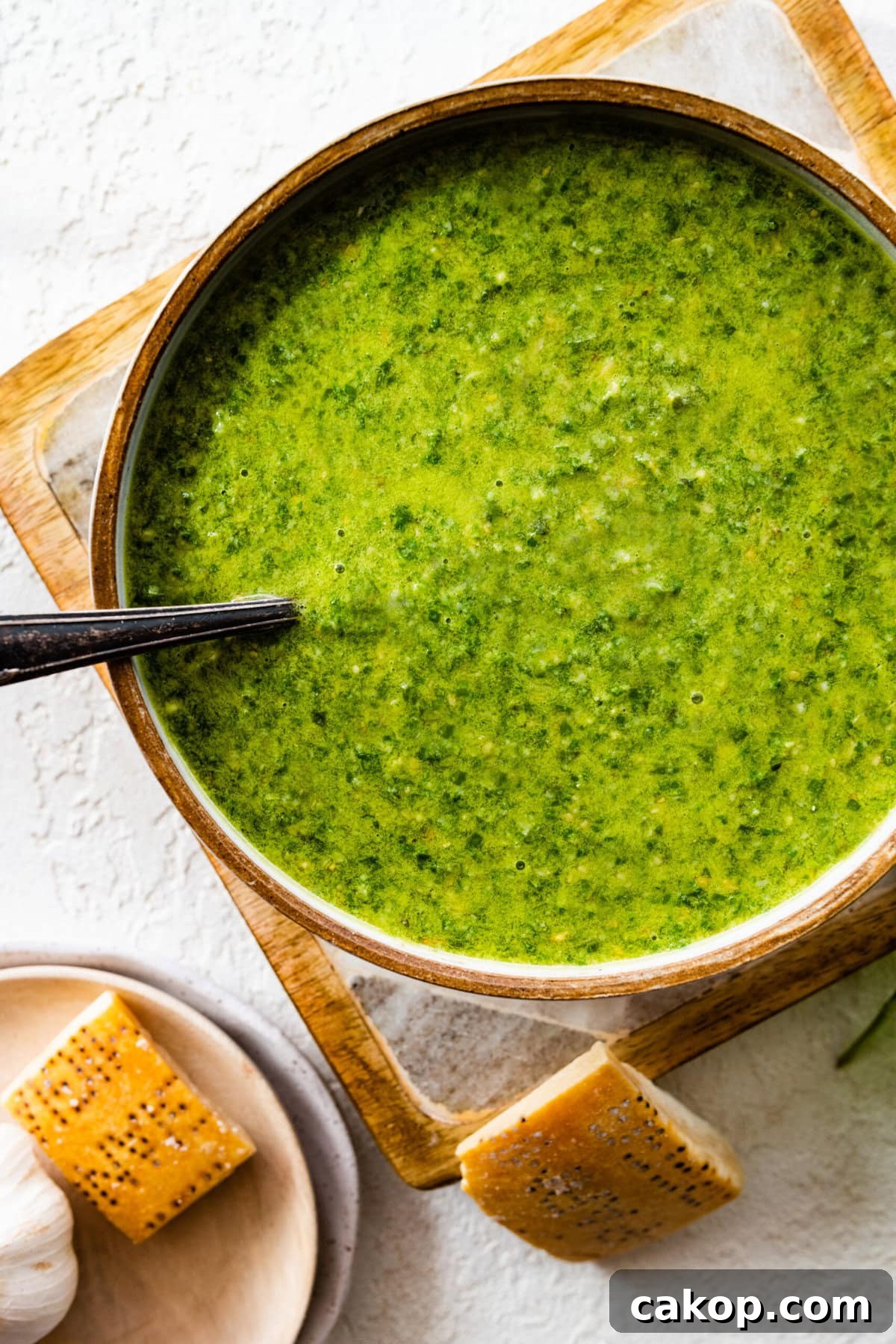

Quick Look: Pesto Genovese (Basil Pesto)
- Prep Time: 10 minutes
- Total Time: 10 minutes
- Servings: 12 servings
- Dietary Info: Vegetarian and gluten-free; can be made vegan
- Method: Blended
- Technique: Pulse basil, pine nuts, garlic, and cheeses in a food processor or crush with a mortar and pestle, then slowly whisk in olive oil until smooth.
- Flavor & Texture: Fresh and herbaceous with nutty, cheesy notes.
Why You’ll Love This Family Favorite

This recipe is close to my heart. The aroma of fresh basil and cheese always brings back summer memories in Italy, when basil grew abundantly and the kitchen smelled of pure, irresistible herbs. The balance of bright basil, nutty pine nuts, and aged cheeses makes this pesto irresistible—seriously, I could eat it by the spoonful.
Use this pesto to make pasta, spread it on panini like a Caprese sandwich, or serve it as a dip for fried cheese bites. It elevates simple dishes with authentic Italian flavor.
Made With AmorE,

“Wonderful recipe, easy and quick, loved by entire family.”
– Paul DiLauro
Table of Contents
- Quick Look: Pesto Genovese (Basil Pesto)
- Simple Ingredients
- Variations & Substitutions
- How to Make Pesto Genovese (Basil Pesto)
- Pesto Genovese FAQs
- Serving Suggestions
- Recipe Tips
- More Pesto Recipes
- Pesto Genovese Recipe
Simple Ingredients
These straightforward, high-quality ingredients form the heart of authentic Pesto Genovese. Use the freshest basil and good olive oil for the best results.
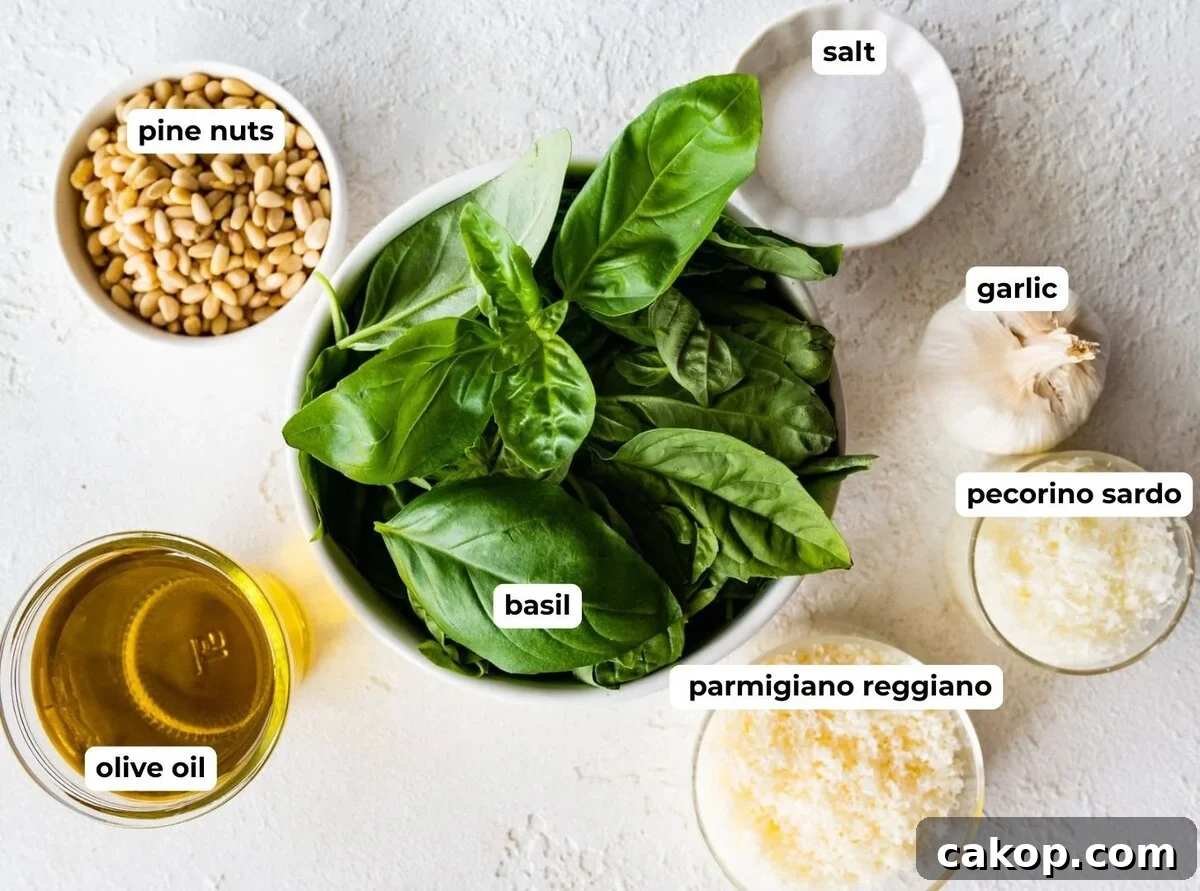
- Fresh Basil (small leaves are sweeter): Small, tender Genovese basil leaves give the sweetest, most aromatic pesto.
- Pine Nuts: Traditional and creamy, they add subtle nuttiness and body.
- Cheeses: Parmigiano-Reggiano and Pecorino Romano combine to provide depth, creaminess, and a touch of sharpness.
- Fresh Garlic: A small amount adds warmth and complexity—adjust to taste.
- Extra Virgin Olive Oil: Use a fruity, good-quality oil for a smooth, peppery finish.
See the recipe card below for exact quantities.
Variations & Substitutions
- Nuts: Substitute walnuts, almonds, or pistachios for pine nuts for a different flavor and texture.
- Cheese: If Pecorino isn’t available, use all Parmigiano-Reggiano.
- Garlic: Roasted garlic makes a milder, sweeter pesto.
- Vegan: Omit the cheese or use a vegan parmesan substitute to make a dairy-free version.
How to Make Pesto Genovese (Basil Pesto)
This classic Genovese pesto is vibrant, fresh, and nutty. Follow the steps below and refer to the recipe card for a printable version.
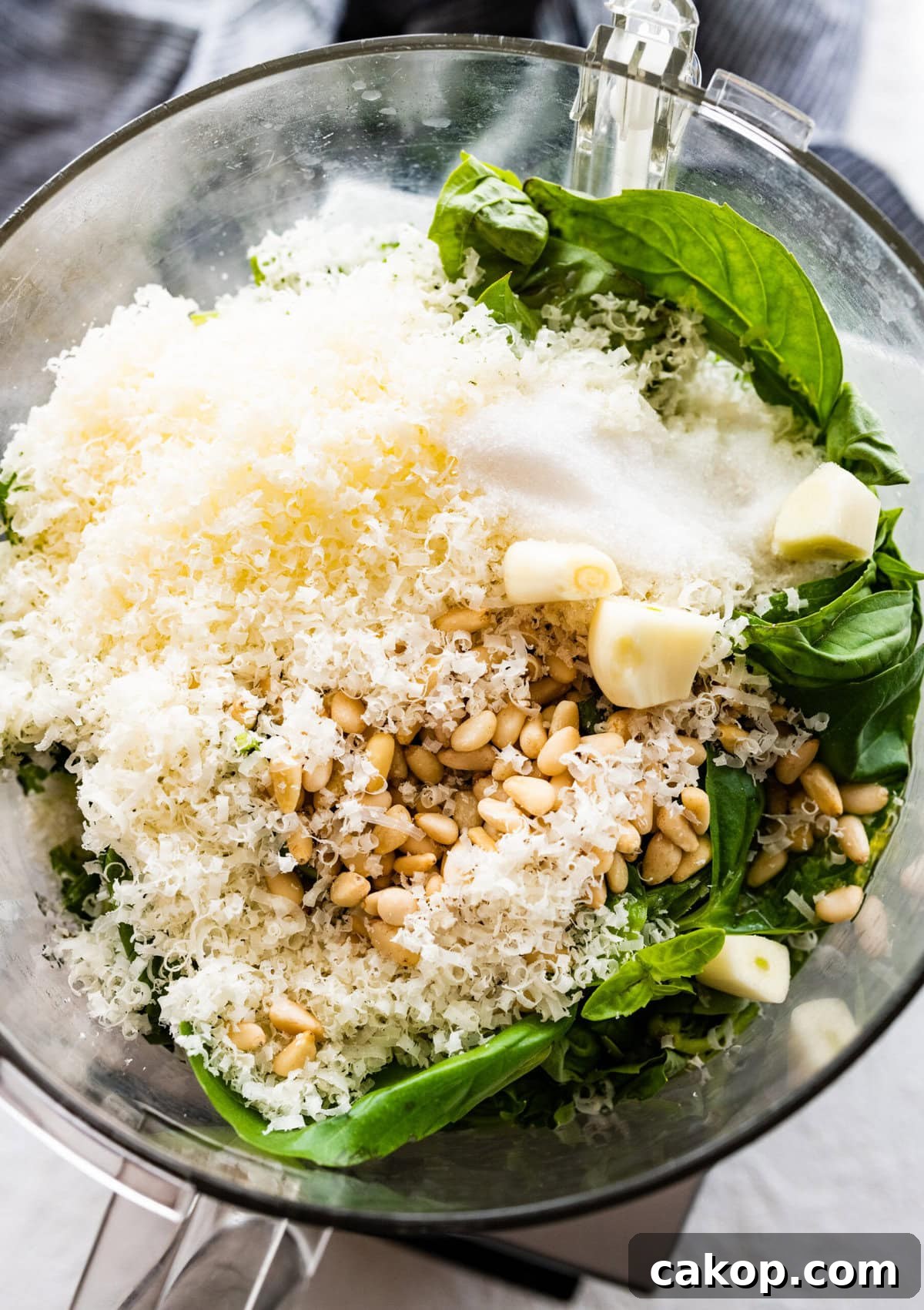
- Add all ingredients to a food processor, blender, or mortar and pestle.
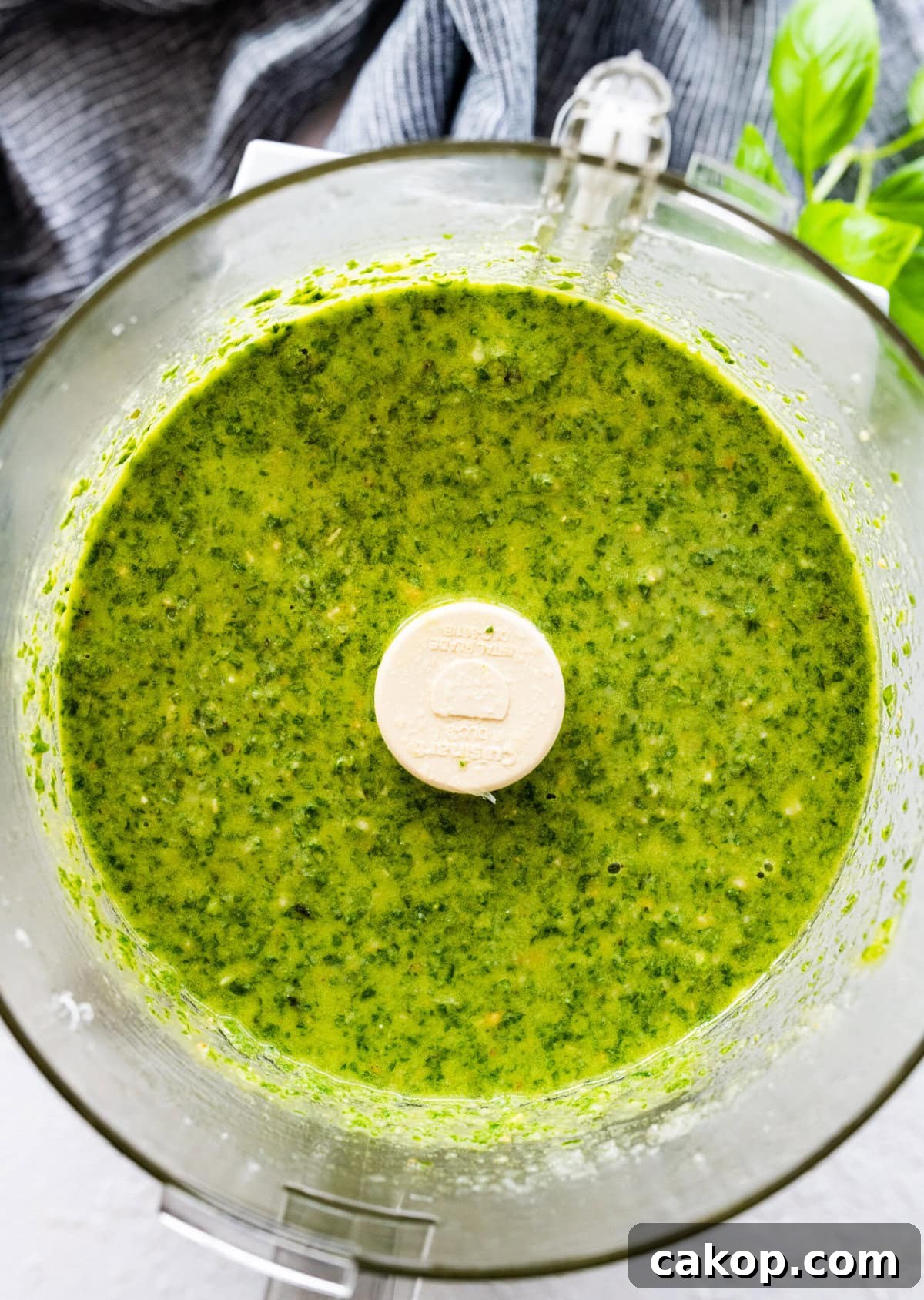
- Pulse until the mixture reaches your desired texture. Stop occasionally to scrape the sides.
Pesto Genovese FAQs
Pesto Genovese (pesto alla Genovese) comes from Genoa in Liguria. It’s a simple, aromatic sauce made from fresh basil, pine nuts, Parmigiano-Reggiano, Pecorino, garlic, and olive oil, traditionally crushed by hand for a silky texture.
Using a mortar and pestle, crush garlic, then pine nuts. Gradually add basil leaves while grinding in a circular motion until a smooth paste forms. Stir in grated cheeses and finally mix in olive oil.
No. Pesto is best served raw at room temperature. Cooking it darkens the basil and changes the texture. If you need to thin it, use warm water or reserved pasta cooking water.
Traditional pesto uses raw pine nuts for a delicate, creamy flavor. Walnuts, almonds, or pistachios are alternatives. Toasting is optional but can give a deeper flavor; raw keeps the pesto lighter.
Make Ahead: Make up to 2 days in advance. Storing: Keep in an airtight container in the fridge for 4–5 days; pour a thin layer of olive oil on top to prevent browning. Freezing: Freeze in small portions (ice cube tray works well). Transfer frozen cubes to a freezer bag and thaw in the fridge before using; do not heat directly.
Serving Suggestions
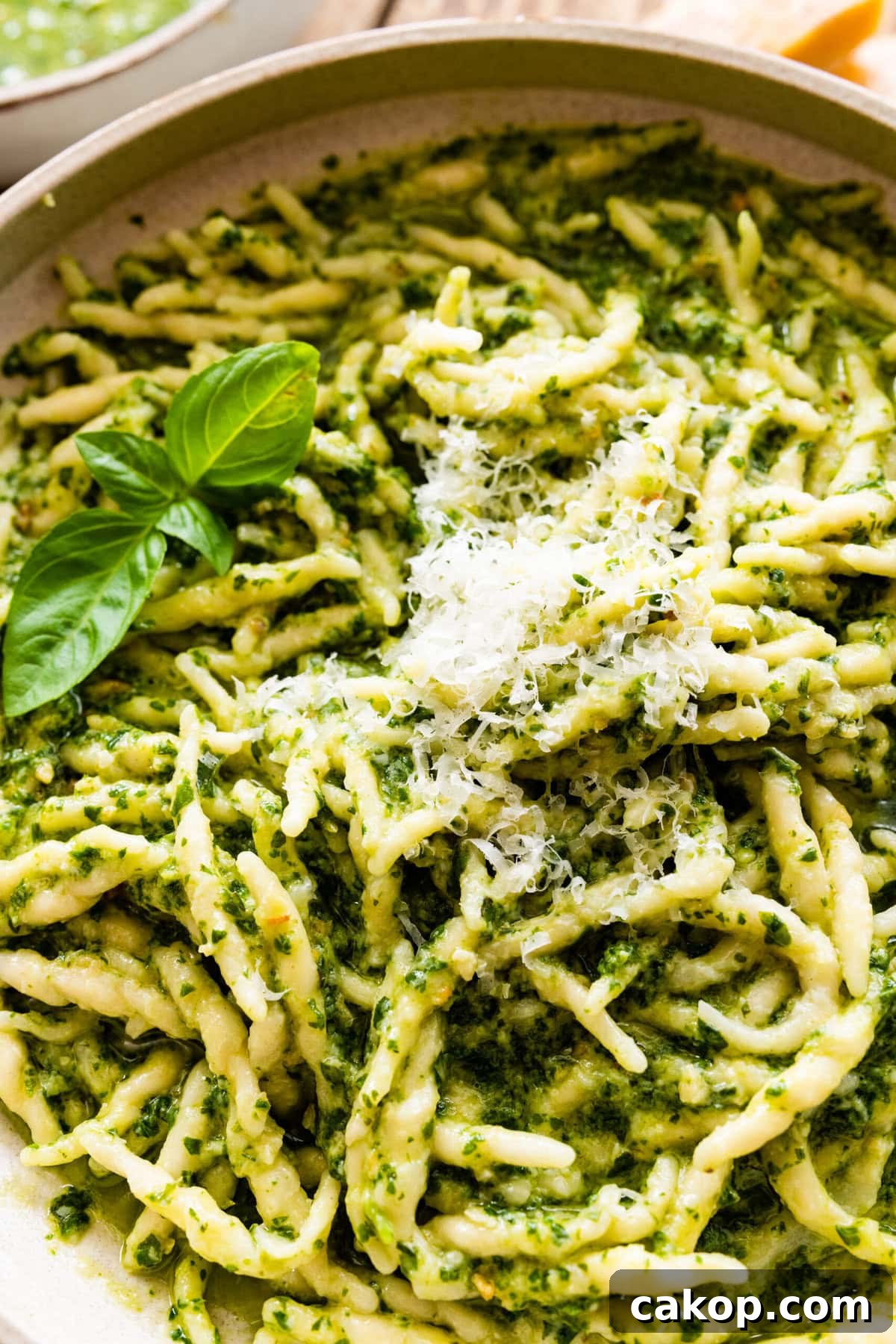
Pesto Genovese is wonderfully versatile. Spread it on bruschetta with mozzarella, drizzle over grilled eggplant or margherita pizza, swirl into minestrone, toss with trofie or pasta of your choice, mix into potato salad with green beans, use as a dip for fritters, or top grilled chicken.
My Pro Tips
Recipe Tips
- Use young, small-leaf Genovese basil: It’s sweeter and more tender than larger leaves.
- Grind slowly when using a mortar and pestle: Slow crushing preserves aroma and color.
- Pulse rather than blend: Short pulses in a processor prevent overheating and bitterness.
- Chill equipment: If using a processor, chilling the bowl and blade helps maintain a vibrant green color.
- Add olive oil last: Especially when making pesto by hand, stir in the oil at the end for the best texture.
More Pesto Recipes
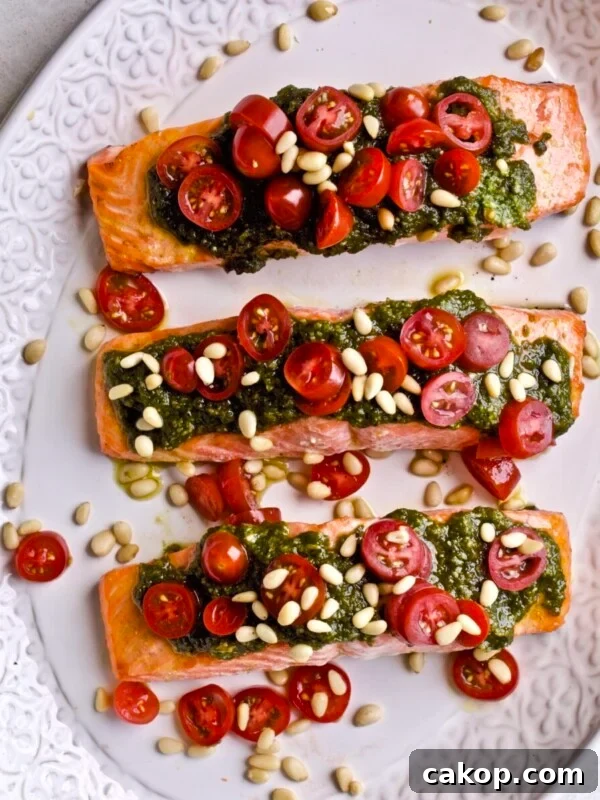
Best Baked Salmon with Pesto Recipe (Easy)

Caprese Sandwich Recipe with Basil Pesto (Panini)
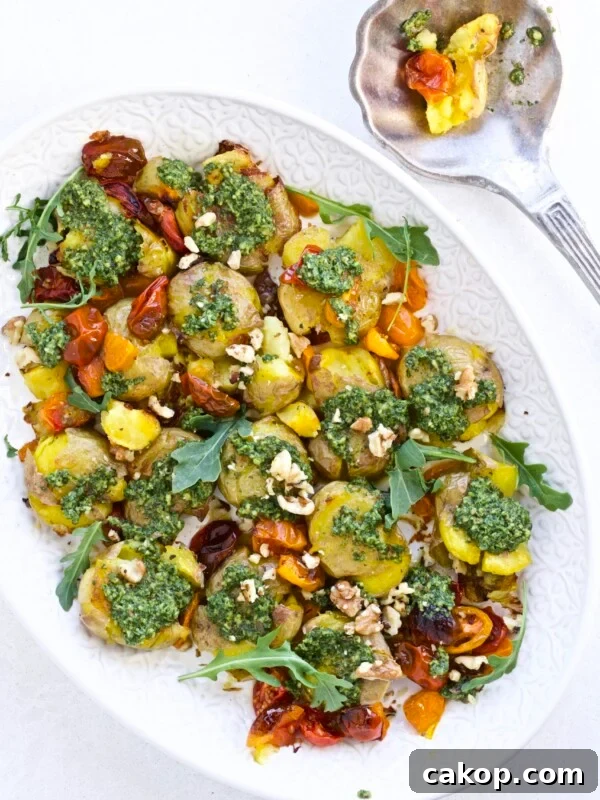
Roasted Smashed Potatoes and Tomatoes with Pesto
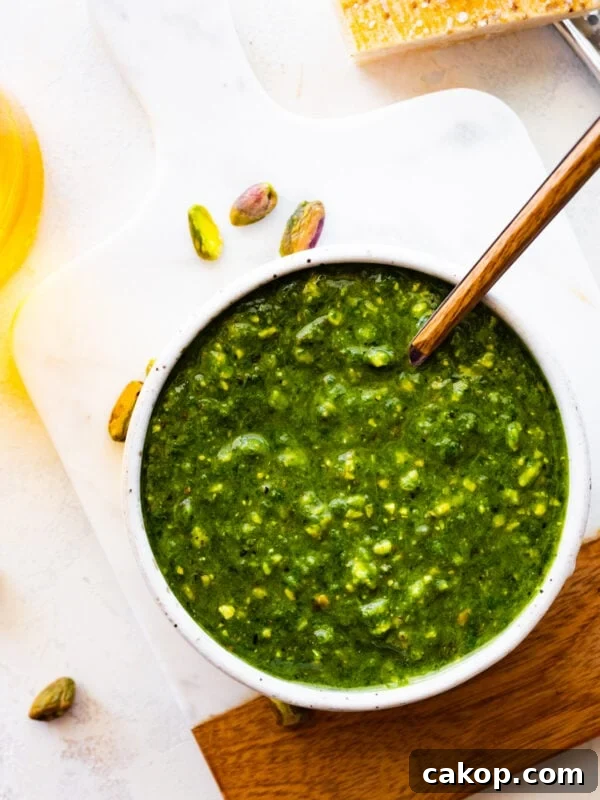
Best Pistachio Pesto Recipe
💙 MADE THIS RECIPE AND LOVED IT? 💙 Please leave a star rating and comment—I love hearing from you! Tag your creations on Instagram and Pinterest.
Pesto Genovese
Rate
Ingredients
- 4 tablespoons pine nuts
- 1 teaspoon sea salt
- 2 cloves garlic, peeled and quartered
- 4 packed cups sweet Italian basil, leaves picked, thick stems removed
- ½ cup good quality extra virgin olive oil, add as needed
- ½ cup Parmigiano-Reggiano, grated
- ¼ cup Pecorino Romano, grated
Instructions
-
Combine all ingredients in a food processor, blender, or mortar and pestle. Blend or crush until coarsely combined or smooth, depending on your preference.
-
Add pine nuts last if you want to control how coarse the texture is. Stop several times to scrape the sides with a spatula.
-
Transfer to a small glass bowl or jar. Pour a thin layer of olive oil on top to prevent browning, then chill.
-
Serve with pasta, on sandwiches, or as a flavorful dip.
Notes
- Use young, small-leaf Genovese basil: Sweeter and more tender than larger leaves.
- Grind slowly when using a mortar and pestle: Slow crushing preserves oils and color.
- Pulse, don’t blend: Short pulses prevent overheating and bitterness.
- Chill your equipment: Cold blades and bowls help keep the pesto green.
- Add olive oil last: Stir in the oil at the end for the smoothest texture.
Nutrition
Carbohydrates: 1 g
Protein: 3 g
Fat: 13 g
Nutrition information is an approximation.
Additional Info
Tried this recipe?
Mention the author or tag your photos with the recipe hashtag on social media.