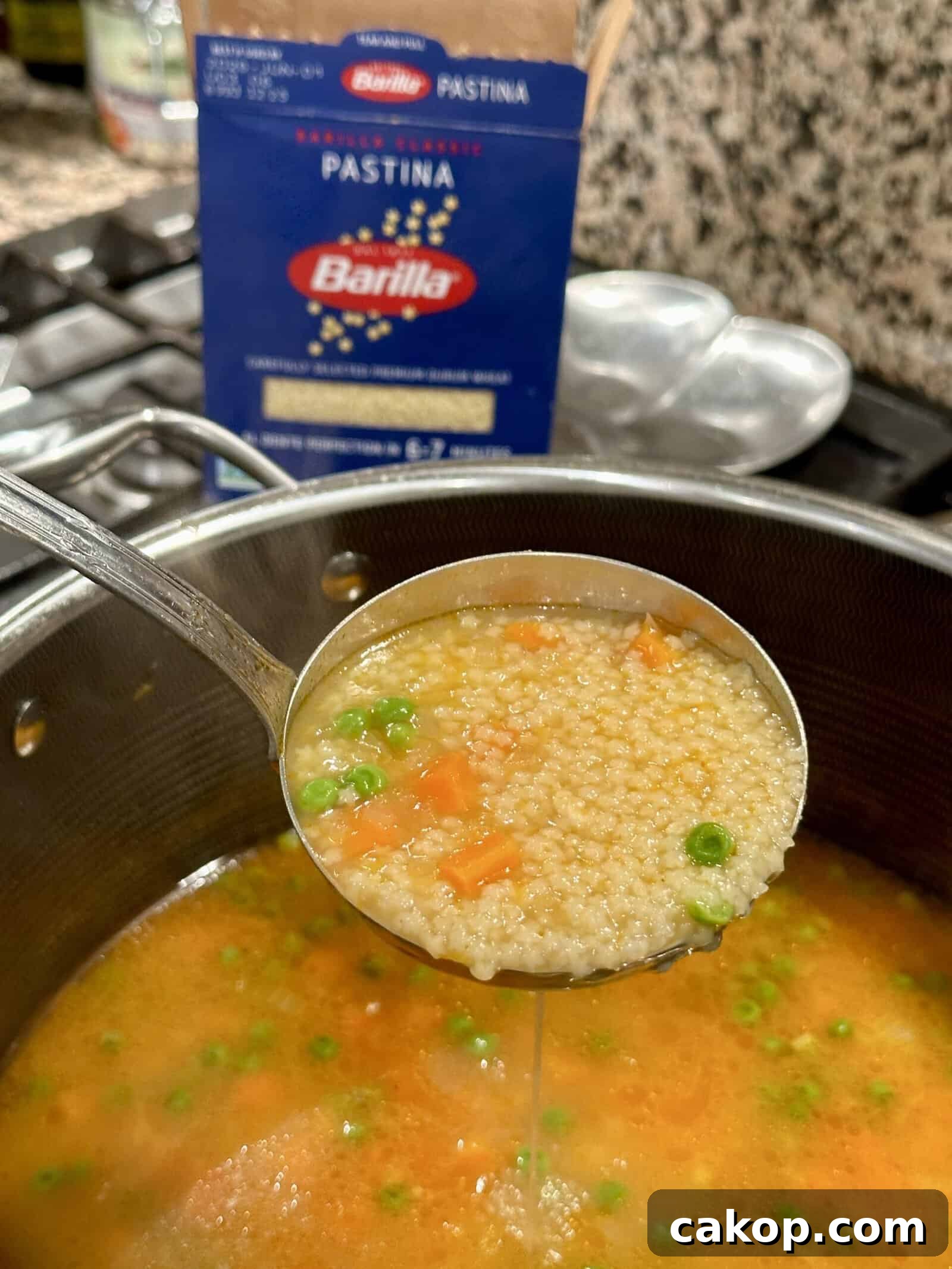
Few things are more comforting than a warm bowl of pastina. Often called “Italian Penicillin,” this simple dish has long been served to soothe colds, warm the soul, and remind us of home. For me, pastina isn’t just for illness — it’s my quick go-to when I crave something cozy after a late night, a long trip, or any day that needs a little comfort.
Pastina is woven into my childhood. I grew up on bowls of it and remember playfully insisting, “I must eat pastina,” until my dad made it. Of the many versions I’ve tried, his vegetable-packed recipe remains my favorite.
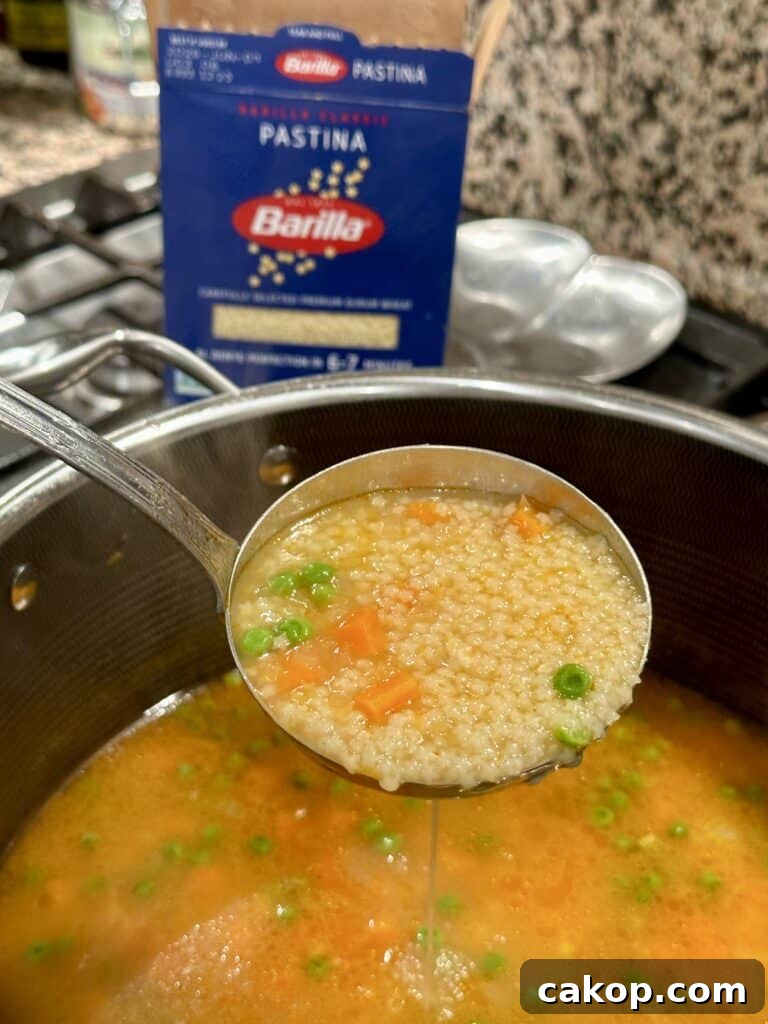
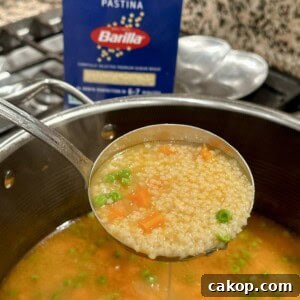
The base of this recipe is a fragrant broth built from sautéed vegetables, a bit of tomato paste, and a few flavor boosters: a Parmigiano rind and a touch of nutmeg. After simmering to deepen the broth, I bring it to a boil, add a handful of sweet frozen peas and the star of the dish — quality pastina. I measure the pastina in espresso cups, just like Nonna used to, and cook it until it’s tender with a slight bite.
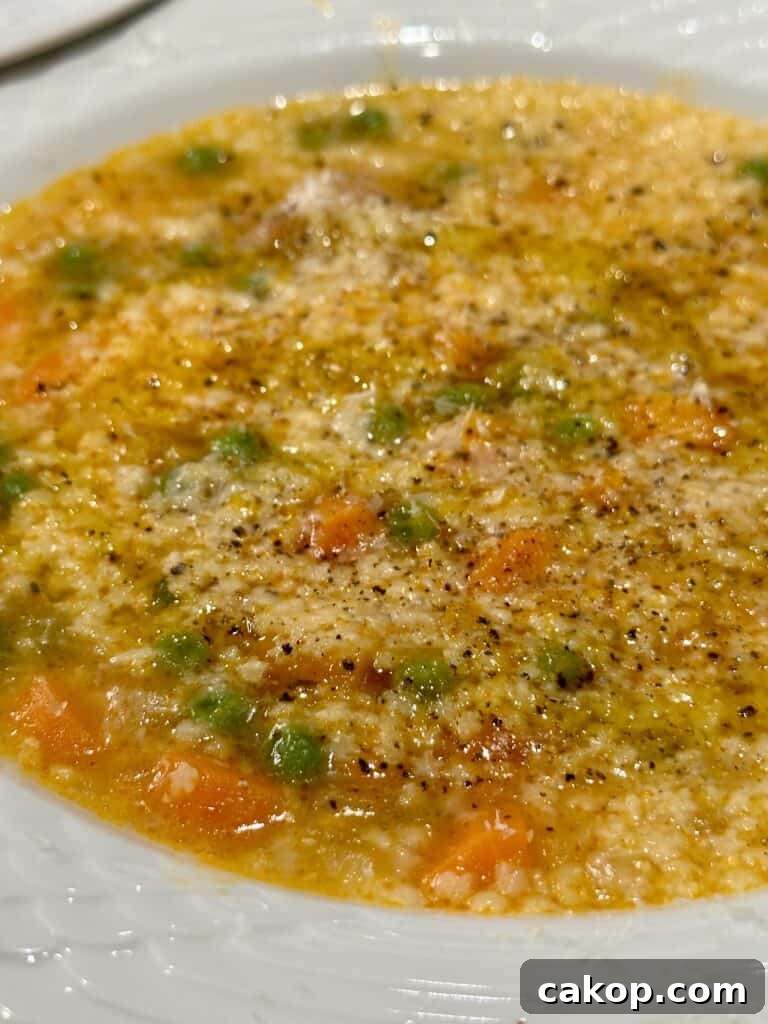
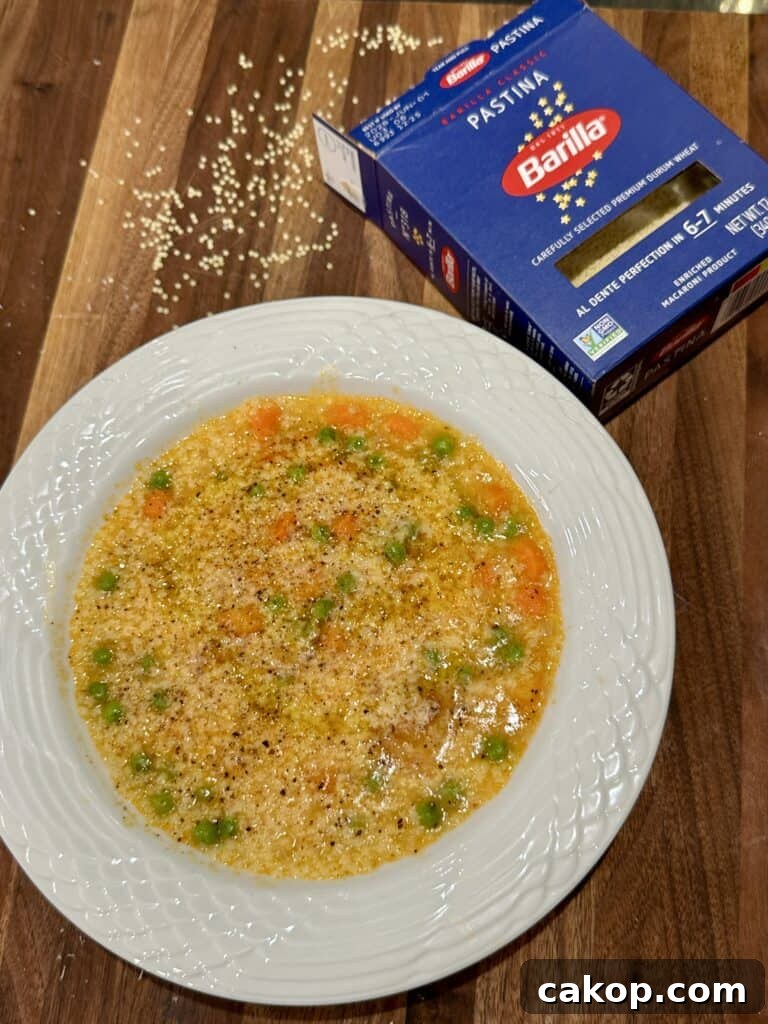
No bowl of pastina is finished without a drizzle of extra virgin olive oil, a crack of fresh pepper, and a generous mound of grated Parmigiano. Sharing this dish at the table always feels like a warm hug; it never fails to bring back cozy memories.
Tips for Success
1️⃣ Use quality pastina: A trusted brand yields the best texture and predictable cook time.
2️⃣ Don’t skip the Parmigiano rind: It adds depth to the broth. If you don’t have one, add extra grated Parmigiano when serving.
3️⃣ Toast the tomato paste: Cooking the paste briefly intensifies its sweetness and deepens the broth’s flavor.
4️⃣ Cook pastina al dente: Pastina overcooks quickly, so turn off the heat as soon as it’s tender but still slightly firm.
5️⃣ Garnish well: Finish with extra virgin olive oil, fresh cracked pepper, and plenty of Parmigiano for the best flavor.
Classic Pastina Recipe
Ingredients:
- ½ large onion, finely chopped (about 1 cup)
- 2–3 carrots, finely chopped (about 1 cup)
- 1 tbsp olive oil
- 2 tbsp tomato paste
- 8 cups water
- 1 Parmigiano rind, cut into cubes (optional but recommended)
- 2 tbsp chicken or vegetable bouillon paste or cubes
- 1 tsp grated nutmeg
- 1 cup frozen sweet peas
- 4 espresso cups of pastina (about ½ a box)
- Salt and pepper to taste
- Extra virgin olive oil and grated Parmigiano for serving
Instructions:
Step 1: Sauté the Vegetables
- Heat the olive oil in a large pot over medium heat.
- Add the chopped onion and carrots with a pinch of salt and cook 2–3 minutes, until softened.
Step 2: Toast the Tomato Paste
- Stir in the tomato paste and combine well.
- Cook 2–3 minutes to toast the paste and deepen its flavor.
Step 3: Simmer the Broth
- Add the water, Parmigiano rind, bouillon, and grated nutmeg.
- Bring to a gentle simmer and cook 20–30 minutes to develop the broth.
Step 4: Cook the Pastina and Peas
- Taste the broth and adjust seasoning.
- Bring the broth to a boil, then add the frozen peas and pastina.
- Stir and cook until the pastina is al dente. Turn off the heat immediately to avoid overcooking.
Step 5: Serve and Garnish
- Ladle the pastina into bowls.
- Drizzle with extra virgin olive oil, add freshly cracked pepper, and top with grated Parmigiano.
Classic Pastina Recipe
Ingredients
- ½ large onion, finely chopped (about 1 cup)
- 2–3 carrots, finely chopped (about 1 cup)
- 1 tbsp olive oil
- 2 tbsp tomato paste
- 8 cups water
- 1 Parmigiano rind, cut into cubes (optional but recommended)
- 2 tbsp chicken or vegetable bouillon paste or cubes
- 1 tsp grated nutmeg
- 1 cup frozen sweet peas
- 4 espresso cups pastina (about ½ a box)
- Salt and pepper to taste
- Extra virgin olive oil and grated Parmigiano for serving
Instructions
Step 1: Sauté the Vegetables
- Heat olive oil in a large pot over medium heat.
- Add the chopped onion and carrots with a pinch of salt; cook 2–3 minutes until softened.
Step 2: Toast the Tomato Paste
- Stir in the tomato paste until combined.
- Cook 2–3 minutes to deepen the flavor.
Step 3: Simmer the Broth
- Add water, Parmigiano rind, bouillon, and nutmeg.
- Bring to a gentle simmer and cook 20–30 minutes to develop flavor.
Step 4: Cook the Pastina and Peas
- Taste and adjust seasoning.
- Bring broth to a boil, add peas and pastina, and cook until pastina is al dente. Turn off the heat promptly.
Step 5: Serve and Garnish
- Ladle into bowls.
- Drizzle with extra virgin olive oil, add cracked pepper, and finish with grated Parmigiano.
Nutrition
Carbohydrates: 8 g,
Protein: 3 g,
Fat: 1 g
Nutrition information is automatically calculated and should be used as an approximation.
Share your experience and tag the creator when you post your dish.
Tried This Recipe? Share Your Feedback!
I’d love to hear how your pastina turned out. Tag @flavorsbyalessandra on Instagram and leave a comment below. Happy cooking! 🥣