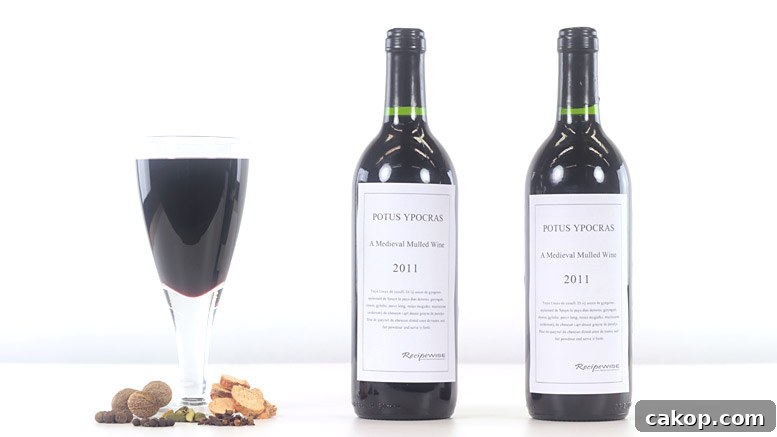
Potus YPocras (Hippocras) Medieval Mulled Wine
Ypocras (also spelled Hippocras) is a medieval mulled wine — “mulled” meaning heated and spiced. While many liquids can be mulled (mead, cider, ale or spirits), spiced wine has long been a winter favourite in the British Isles. Although mulled drinks predate the Middle Ages, this particular recipe appears in the 14th‑century manuscript The Forme of Cury, widely regarded as one of the earliest English cookery books (circa 1390).
The name is usually linked to Hippocrates, the ancient physician, who used wine as a base for medicinal infusions, adding herbs for effect and honey to improve taste. Another explanation traces the name to the “Hippocratic sleeve,” a cloth strainer used to filter herbs and sediment from steeped liquids.
Historically the drink has appeared under many spellings — vpocrate, ipocras, ipocrist, hipocras, ippocras, hvpocras and hvppocras among them. Below you will find the original 14th‑century receipt and a practical modern translation suitable for a contemporary kitchen. Made in advance, hippocras bottles make thoughtful homemade gifts for the holidays and can be enjoyed through the New Year.
Typical of medieval recipes, the original text omits quantities for two key elements: the wine and the sweetener (sugar or honey). The manuscript lists only the ground herbs and spices to be added. Later medieval sources such as the 1393 Ménagier de Paris and the 15th‑century Viandier de Taillevent help fill in these gaps and inform the proportions used below.
Purchasing herbs and spices: Most of the spices named in the recipe are now easy to source online from specialist retailers. Search for the dried herb or spice you need — for example, “buy spikenard root” — and choose a reputable supplier.
Note: This mulled wine can be prepared a few days before serving, but it benefits from aging: made several weeks or even months in advance the spice flavours deepen and integrate. It’s a distinctive and memorable mulled wine; making a dozen bottles — some to keep and some to gift — is recommended.
Original Medieval Recipe From ‘The Forme Of Cury’ 14th Century
Pur fait Ypocras
Treys Unces de canell. Et iij unces de gyngener. spykenard de Spayn le pays dun deneres. garyngale. clowes, gylofre. poivr long, noiez mugadez. maziozame cardemonij de chescun i.qrt douce grayne de paradys flour de queynel de chescun dimid unce de toutes. soit fait powdour and serve it forth.Proposed translation: To make hippocras. Three ounces of cinnamon and three ounces of ginger. One penny worth of spikenard of Spain. Galangal, cloves, long pepper and nutmeg. Marjoram and cardamom, a quarter ounce for each. Grains of paradise (or guinea grains) and cassia buds, a tenth ounce for each. So make the powder and use it.
From the translation of the medieval manuscript, ‘Forme of Cury’ by Samuel Pegge
Ypocras (or Hippocras) how it is made (wafers are normally eaten with it). Bishop Godwin renders it ‘Vinum aromaticum’. It was served at the start of lavish entertainments, in the middle before a second course, and at the end. Its name may derive from the “Hippocrates sleeve,” the bag or strainer through which it was passed, or because it was prepared following Hippocratic doctrine. The Italians call it hipocrasso. It appears similar to the rich spiced wine known as Piment or Pigment, sold by vintners from around 1250.
Samuel Pegge transcribed a detailed process from a manuscript owned by Thomas Astle, describing preparation for lords and common people, guidance on basins and bags for filtering, balancing spice strengths with cinnamon or sugar, and instructions to bottle and serve hippocras with wafers.
Potus Ypocras (Hippocras)
Note on spikenard: Spikenard is the aromatic root of Nardostachys jatamansi, valued for its scent. Because it was costly, later recipes sometimes substituted lavender or rosemary. A “penny worth” in medieval sources can indicate a small quantity roughly the size of a coin’s face when ground.
Note on long pepper: Long pepper (Piper longum) has a hotter, extended heat compared with common black pepper. It was used widely as a spice in medieval cookery.
Note on cassia buds/bark: The recipe’s reference to cassia could mean buds, berries, flowers or bark. Dried cassia buds resemble cloves and are likely what the original recipe intended; they were used across Eastern cuisines and in spiced drinks.
Sugar or honey: By the 14th and 15th centuries either sugar or honey — or both — could be used. The medieval text omits a sweetener, but nearly every hippocras variation includes one.
Tip on grinding spices: Freshly ground spices from whole or recently dried ingredients yield more vibrant flavour than pre‑ground store cupboard spices.
Recipe Ingredients:
- 2 bottles red wine (about 1.5 litres), French or Spanish
- 200 g natural brown sugar (or 3 tbsp clarified honey)
- 3 tsp ground cinnamon
- 3 tsp ground ginger
- 1/2 tsp ground spikenard root
- 1/4 tsp each ground galangal, cloves, long pepper, nutmeg, marjoram and cardamom
- A pinch of ground grains of paradise (melegueta pepper)
- A small pinch of ground dried cassia buds
- Cheesecloth or muslin for straining
Recipe Method:
Grind the dried spices to a fine powder using a pestle and mortar or spice grinder.
In a saucepan, warm the wine with the sugar just until the sugar dissolves; do not boil away the alcohol. Remove from heat and pour the sweetened wine into a non‑metallic bowl. Stir in the ground spices, cover, and let the mixture rest at room temperature for 48 hours to infuse.
After 48 hours a spice residue will settle. Carefully ladle the wine through a strainer lined with two layers of fine cloth (cheesecloth or muslin) into a clean container, leaving as much settled spice behind as possible. If needed, repeat the filtration for clarity.
Bottle the strained, infused wine in sterilized bottles and seal. For best results, age the bottles for at least one month so the flavours can marry; the flavour improves with time. To serve, gently warm the hippocras over low heat and ladle into glasses. It can also be prepared a few nights ahead if necessary.
These bottles make excellent seasonal gifts: re‑cork, label, and present a homemade hippocras to friends and family for Christmas or New Year.