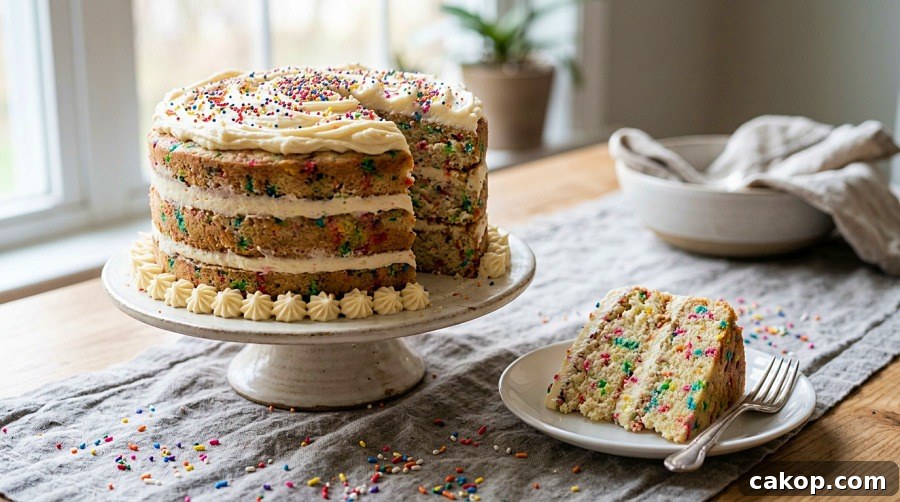
The first time someone at a party asked for my “from-scratch” confetti cake recipe, I almost laughed — it started from a box. A well-doctored box mix, yes, but still the inexpensive kind you find on the grocery shelf. I keep coming back to this method because with a few simple swaps it tastes like a cake you spent hours on, yet it needs only about twenty minutes of active work.
If you’ve ever spent too much on specialty flours and vanilla only to end up with a dry layer cake, this is the solution. Replace the box mix’s water and oil with real dairy and butter, add an extra egg yolk, and finish with homemade buttercream. The result is tender, rich, and reliably delicious — without the risk of a full scratch recipe.
To make a boxed confetti cake taste homemade: swap the water for room-temperature buttermilk, use melted unsalted butter instead of oil, add an extra egg yolk, mix in 2 teaspoons of pure vanilla extract, and top it with homemade buttercream. These changes rebuild the fat and flavor profile so the cake feels bakery-made.
Table of Contents
- Doctored Box Confetti Cake Mix Recipe At a Glance
- Why This Doctored Confetti Cake Mix Works
- Ingredients
- Equipment You Will Need
- Step-by-Step Instructions
- Making the Homemade Buttercream
- Assembling the Naked Confetti Layer Cake
- Pro Tips
- Variations Worth Trying
- Storage, Make-Ahead, and Freezing
- Serving Suggestions
- Common Mistakes
- FAQ
- Final Thoughts
Doctored Box Confetti Cake Mix Recipe At a Glance
| Details | |
|---|---|
| Prep time | 15 minutes |
| Cook time | 28 minutes |
| Total time | 1 hour 30 minutes (with cooling) |
| Servings | 12 slices |
| Difficulty | Easy |
| Approx. calories | 480 per slice (with buttercream) |
| Cuisine | American |
This guide covers the key swaps, full ingredient list, a step-by-step method for a three-layer naked cake, my go-to vanilla buttercream, and hard-earned tips from many batches.
Why This Doctored Confetti Cake Mix Works
Box mixes are formulated to be foolproof, but they rely on inexpensive fats and powdered dairy that can leave the cake tasting thin. The mix’s leavening chemistry is reliable, so the structure is there — what’s missing is real fat, dairy, and vanilla. Replacing water with buttermilk, oil with butter, and adding an extra yolk restores the mouthfeel and flavor closer to a scratch cake.
Fat and dairy coat flour proteins and slow gluten development, creating a softer crumb. That simple change is what converts a bland store-bought base into a tender, bakery-style confetti cake.
Ingredients
For the cake
- 1 box (15.25 oz) white or vanilla confetti cake mix (Funfetti-style)
- 1 cup buttermilk, room temperature
- 1/2 cup unsalted butter, melted and slightly cooled
- 3 large eggs, room temperature
- 1 large egg yolk
- 2 teaspoons pure vanilla extract
- 1/2 teaspoon fine sea salt
- 1/3 cup rainbow jimmies (use jimmies, not nonpareils)
For the vanilla buttercream
- 1 cup unsalted butter, softened to room temperature
- 4 cups powdered sugar, sifted
- 3 tablespoons heavy cream
- 2 teaspoons pure vanilla extract
- 1/4 teaspoon fine sea salt
Substitutions: If you don’t have buttermilk, stir 1 tablespoon lemon juice or vinegar into 1 cup whole milk and let sit 10 minutes; it works in a pinch. Real buttermilk yields a slightly better texture. If only salted butter is available, omit the added salt in the cake. Avoid nonpareils — they dissolve and discolor the batter; jimmies hold up.
Equipment You Will Need
- Three 8-inch round cake pans (or two 9-inch)
- Parchment paper
- Stand mixer or hand mixer
- Offset spatula
- Bench scraper (for a naked finish)
- Serrated knife
- Cooling rack
Step-by-Step Instructions
1. Prep your pans and oven
Preheat the oven to 350°F. Cut parchment rounds for three 8-inch pans, grease the pans, press the parchment in, and grease the parchment lightly. This prevents sticking and is an easy step many box mix instructions skip.
2. Whisk the wet ingredients
In a large bowl, whisk together buttermilk, melted butter, eggs, the extra yolk, and vanilla until smooth. The butter should be warm, not hot, to avoid cooking the eggs. If you see streaks of butter, whisk a bit longer until blended.
3. Combine wet and dry
Pour the cake mix and salt over the wet ingredients. Using a hand mixer on low, mix 30 seconds to combine, then medium speed for 90 seconds. Scrape the bowl. The batter will be thicker than standard boxed batter because of the higher fat content — that’s normal.
4. Fold in the sprinkles
Gently fold in the jimmies with a rubber spatula until evenly distributed. Stop as soon as they are mixed in to avoid color bleeding.
5. Divide and bake
Divide batter between the three pans (about 380 grams per pan if weighing). Bake on the middle rack for 24–28 minutes, until a toothpick comes out with a few moist crumbs and the top springs back when touched.
6. Cool properly
Cool in the pans 10 minutes, then loosen the edges and transfer to a rack to cool completely, at least 90 minutes. Frosting a warm cake can cause the buttercream to slide.
Making the Homemade Buttercream
Beat softened butter on medium-high for 4 minutes until pale and fluffy. Reduce speed to low and add sifted powdered sugar one cup at a time. Add cream, vanilla, and salt, then beat medium-high for 3 more minutes until light and spreadable. Adjust with salt or a teaspoon of cream to taste and texture.
Assembling the Naked Confetti Layer Cake
- Level the layers. Trim domes with a serrated knife; save scraps for snacking.
- Anchor the bottom. Put a small dollop of buttercream on the cake board or plate and set the first layer in place.
- Fill between layers. Spread ~1/2 cup buttercream on the first layer, place the second layer top-side down, repeat, then top with the final layer flat-side up.
- Crumb coat. Apply a thin layer of buttercream around the cake and chill 20 minutes.
- Final coat. Add more buttercream and use a bench scraper to remove excess until the cake layers peek through for a naked finish.
- Finish. Pipe rosettes if desired and scatter extra sprinkles. Fresh flowers are optional but be cautious if children will be serving themselves.
Pro Tips From Many Batches
- Bring ingredients to room temperature. Cold dairy and eggs can cause the melted butter to seize.
- Weigh box contents when scaling up. Not all “15.25 oz” boxes contain the exact same grams.
- Look for visual doneness. The cake pulling away from the pan and a springy top are more reliable than a toothpick alone.
- Sift the powdered sugar. It prevents lumpy buttercream.
- Color the buttercream earlier. Gel colors deepen overnight, so tinting ahead helps you hit the right shade.
Variations Worth Trying
- Almond confetti: Swap 1 teaspoon vanilla for almond extract.
- Brown butter confetti: Brown the butter before using for a nutty depth.
- Lemon confetti: Add 1 tablespoon lemon zest to the batter and 1 teaspoon to the buttercream.
- Chocolate buttercream: Add 1/2 cup unsweetened cocoa and an extra tablespoon cream to the buttercream.
- Cupcakes: The batter makes 24 cupcakes; bake at 350°F for 18–20 minutes.
Storage, Make-Ahead, and Freezing
Counter: A fully frosted cake keeps 2 days under a cake dome at room temperature.
Fridge: Store covered up to 5 days; bring slices to room temperature 30 minutes before serving for best texture.
Freeze layers: Wrap unfrosted, cooled layers tightly in plastic, then foil; freeze up to 2 months. Thaw wrapped on the counter to avoid condensation on the cake surface.
Freeze assembled cake: Freeze uncovered until the buttercream is firm (about 2 hours), wrap, and thaw in the fridge overnight.
Make-ahead schedule: Bake layers the day before, make buttercream the morning of, and assemble a couple of hours before serving. The cake often tastes better on day two as flavors settle.
Serving Suggestions
This confetti cake is perfect for birthdays, showers, graduations, or any casual celebration. It pairs well with coffee, cold milk, or a scoop of vanilla ice cream. For a dessert table, offer smaller cookies or bars alongside the cake to give guests variety. In warm conditions, avoid leaving egg-containing cakes at room temperature for extended periods — follow standard food-safety practices and refrigerate if the venue is hot.
Common Mistakes That Ruin a Doctored Confetti Cake Mix
- Cold ingredients: Causes broken-looking batter and uneven baking.
- Overmixing after adding sprinkles: Leads to color bleeding.
- Frosting warm cakes: Buttercream will slide off.
- Not using real vanilla: Imitation vanilla leaves the cake flat.
- Using nonpareils: They bleed and discolor the batter.
FAQ
Can I make this the day before?
Yes. Bake and cool the layers, wrap tightly, and frost the next day. The crumb often improves slightly as moisture redistributes.
Why is my box cake mix cake dry?
Overbaking is the most common cause — start checking early. Using water instead of dairy also yields a drier crumb; buttermilk keeps it tender.
Can I use this method with chocolate cake mix?
Yes. The same swaps apply. Adding a bit of espresso powder can deepen chocolate flavor; skip sprinkles for chocolate mixes.
How do I get flat cake tops?
Bake at 325°F for a few extra minutes or use wet cake strips around the pans to reduce doming.
Can I make this gluten free?
Use a reliable 1-to-1 gluten-free white or vanilla cake mix and apply the same doctoring method. Expect a slightly denser texture.
How long does buttercream keep?
In an airtight container in the fridge, buttercream keeps up to 1 week. Let it warm to room temperature and rewhip before using.
Can I double this recipe?
Yes. Two boxes will fill three 9-inch pans or four 8-inch pans. Double the buttercream as well; bake times are similar, check at the referenced times.
Final Thoughts
This doctored confetti cake mix is my go-to when I want a cake that looks and tastes like I spent hours on it, but I don’t have the time. Respecting real fat, dairy, and vanilla turns a reliable shortcut into a celebration-worthy cake. Next time a birthday sneaks up on you, this is the cake to make.
If you try this, leave a comment to share how it turned out and any variations you used — I love hearing about tweaks and results.