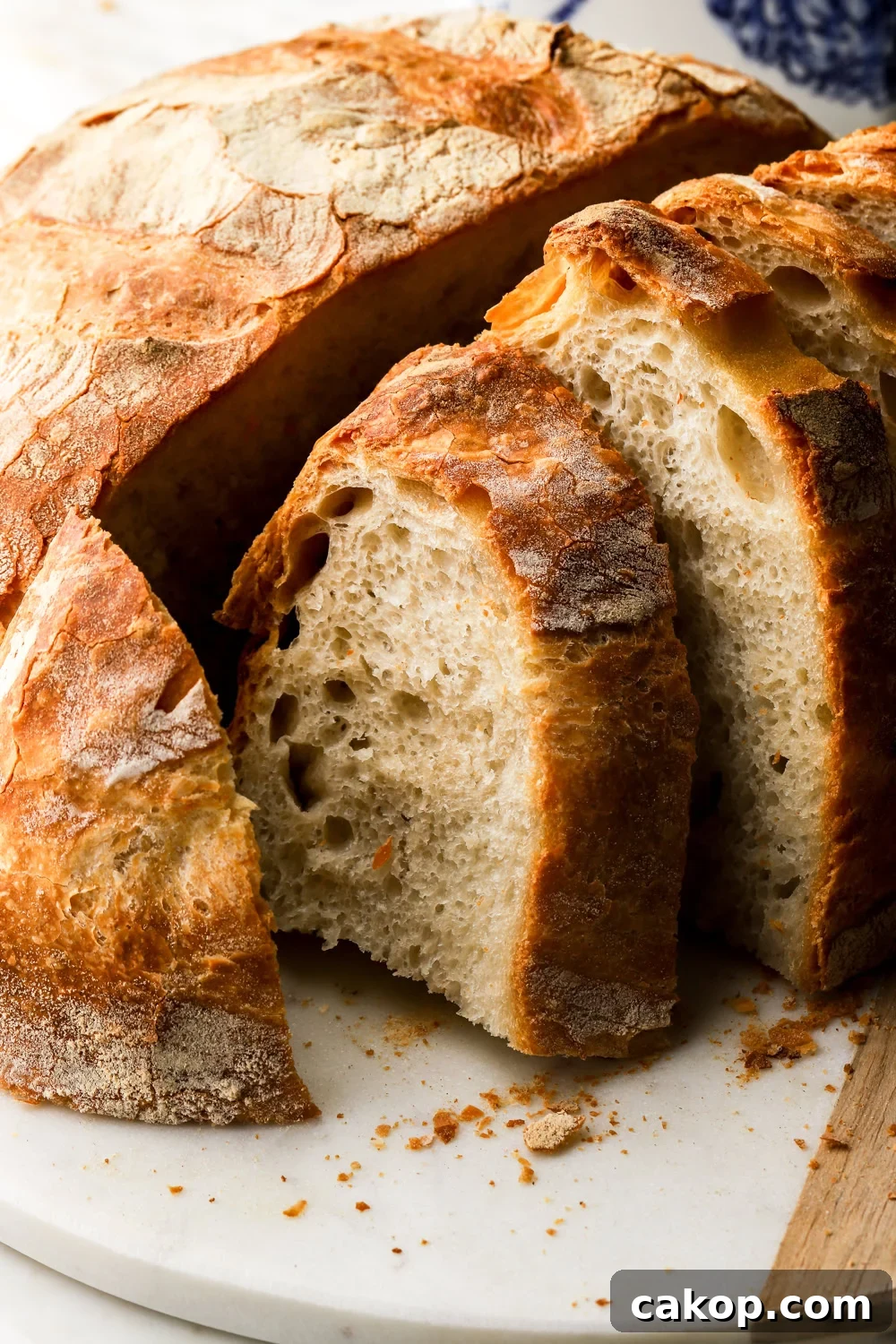
Once you bake homemade bread, store-bought loaves will feel like a compromise. This overnight Italian bread is a new favorite: a crisp, chewy crust with a tender, airy crumb. It’s ideal for toast, sandwiches, grilled cheese, or dipping into soups and stews.
I share a lot of dessert recipes, but bread is my weakness. I’ve been baking on and off for years and finally posted this bread recipe after my kids requested it constantly. This version uses just five simple ingredients, minimal hands-on time, and can be made either quickly or left to rise overnight for deeper flavor.
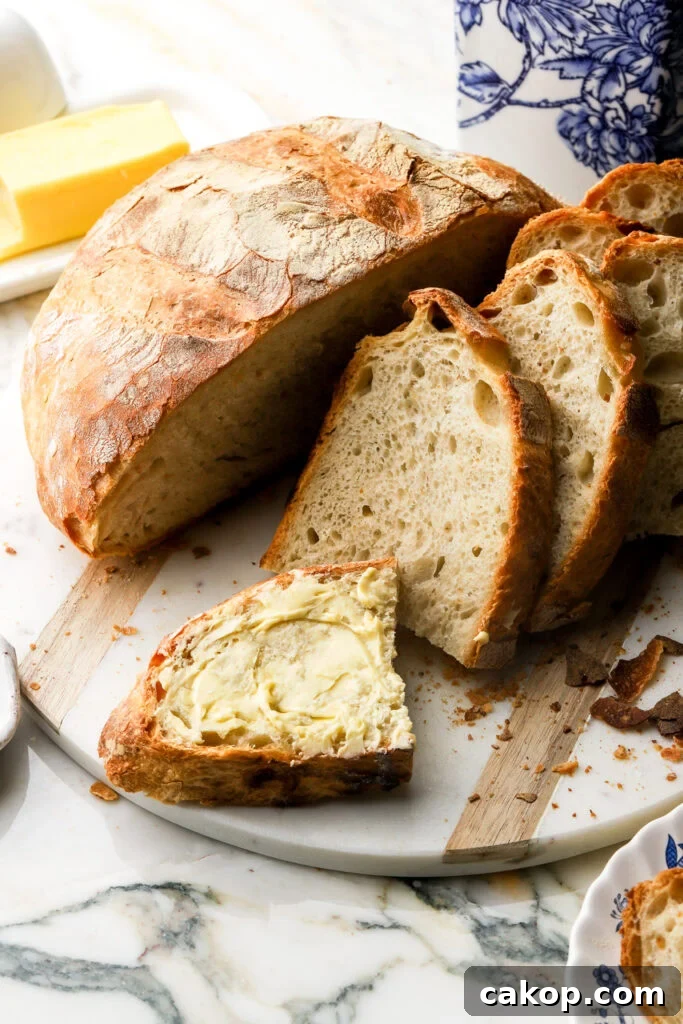
What is Italian Bread?
Bread comes in many styles. Artisan loaves are typically lean—made from flour, water, salt, and yeast—while enriched doughs like brioche include butter, eggs, sugar, or milk. This Italian-style loaf is only slightly enriched with a small amount of fat (butter or oil), giving the crumb extra tenderness without weighing the loaf down.
This recipe is inspired by a memorable bread served at an Italian restaurant: crisp, chewy crust and soft, pillowy interior. It’s a no-knead method that gains structure through stretch-and-folds and a long, slow rise overnight.
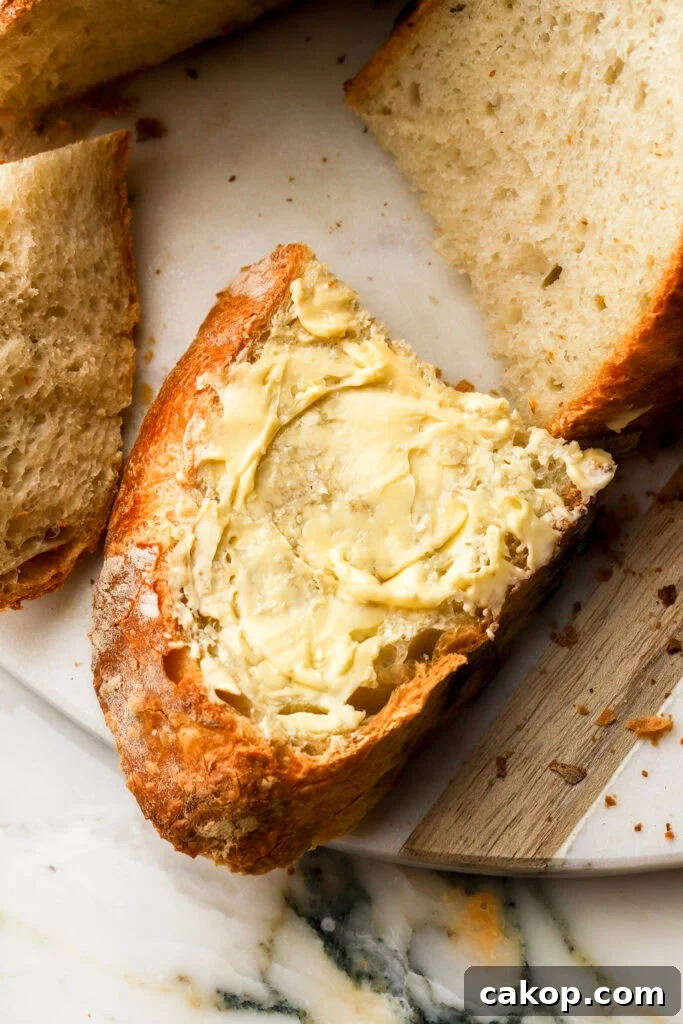
Ingredients & Substitutions
Full recipe quantities are in the recipe card below. Bread can seem intimidating, but it’s mostly patience—this is a no-knead dough that benefits from a long rise to develop flavor and structure.
- Flour: I use bread flour for better gluten development and chew, but all-purpose flour also works. For consistent results, weigh flour with a digital kitchen scale.
- Water: Room-temperature or warm water is fine. You don’t need hot water for this recipe.
- Yeast: This recipe works with active dry yeast or instant yeast. I generally add the yeast directly to the dough and let it ferment overnight; for long, slow rises you only need a very small amount of yeast.
- Fat: A little butter or olive oil makes the crumb more tender. Butter yields a slightly lighter-colored crumb, while olive oil can produce a spongier, darker interior.
TIP: Use a digital scale—measuring flour by weight gives the most accurate and repeatable results.
What Kind of Yeast to Use
The recipe below is written with active dry yeast, but instant yeast can be used interchangeably and the same procedure applies. Activating active dry yeast in warm water first is traditional and can confirm the yeast is alive, but for long overnight fermentation I simply mix the yeast with the other ingredients and let the dough rise slowly.
Quick option: If you need a faster loaf, use about 7 g (1 packet / 2 1/4 tsp) instant yeast and allow the dough to rise until doubled, roughly 1–2 hours. The flavor will be a bit less developed than the overnight method, but it still makes good bread.
How To Make Italian Bread
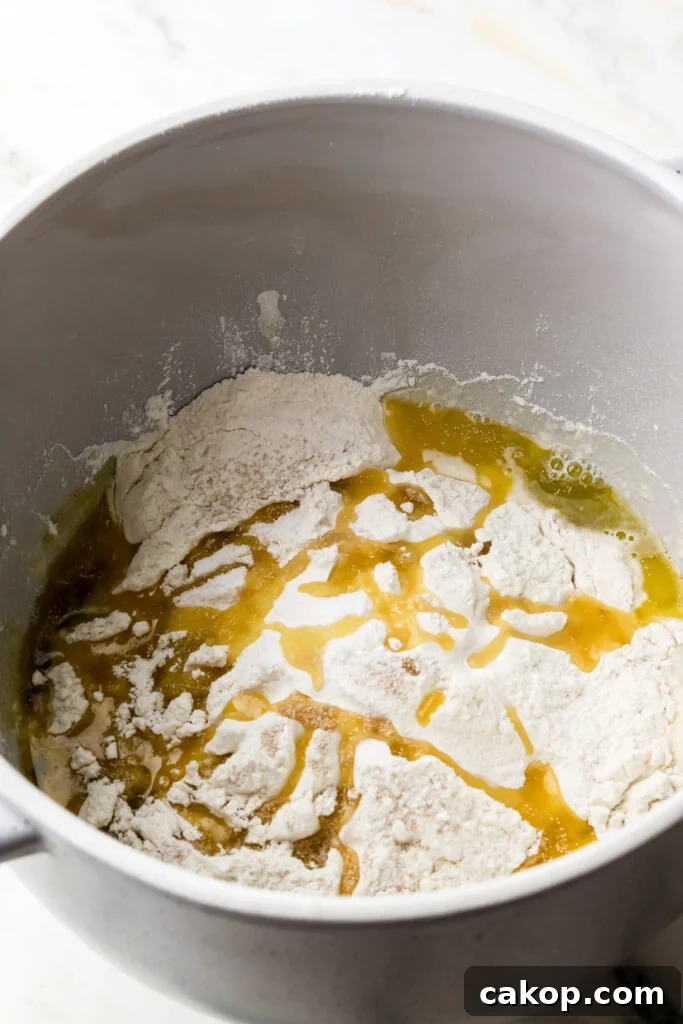
- Add all ingredients to a large bowl or the bowl of a stand mixer.
- Mix with a dough hook, wooden spoon, or Danish whisk until all flour is hydrated and the dough forms a shaggy mass. Cover and rest 30–60 minutes.
- Perform stretch-and-folds: wet your hand, grab one side of the dough, stretch it without tearing, and fold it over itself. Rotate the bowl 90° and repeat until you’ve stretched each side once (four folds total).
- Rest another 30–60 minutes and repeat the stretch-and-fold sequence a second time. Cover tightly and let the dough rise overnight (at least 8 hours, typically 10–12 hours).
- In the morning the dough should be bubbly and airy. Gently pull it away from the bowl, then turn it out onto a lightly floured surface.
- Shape: stretch into a rectangle (don’t use a rolling pin), fold the top third down and the bottom third over it, then roll from a short end into a tight ball. Tuck and seal the seams so the loaf holds its shape.
- Place the dough on a crumpled sheet of parchment in a bowl or banneton lined with parchment and let it proof until nearly doubled, about 60–90 minutes at a warm room temperature.
- Preheat your oven with the Dutch oven inside to 425–450°F (220–232°C).
- Score the loaf with a sharp knife or lame. Carefully transfer the dough (on the parchment) into the hot Dutch oven. Add a few ice cubes around the dough under the parchment to generate steam, cover, and bake 15 minutes with the lid on, then 20–25 minutes with the lid off until the crust is deeply golden and the internal temperature reaches about 195–200°F (90–93°C).
- Allow the bread to cool on a wire rack until mostly cooled before slicing; cooling completes the crumb set and prevents gummy texture.
Stretch and Folds vs. Kneading
Stretch-and-fold replaces traditional kneading for this recipe. By gently stretching the dough and folding it over itself, gluten develops gradually without overworking the dough. This method builds enough strength for good oven spring while keeping the crumb tender. Repeat the sequence twice with rest intervals in between; rinse your hands under cold water before each stretch to reduce sticking.
What Temperature To Proof Dough At?
Room temperature around 75°F (24°C) works well for the overnight rise. For longer, slower fermentation you can retard the dough in the refrigerator for 18–72 hours; this develops more complex flavor. If chilled, shape the dough after the cold proof and bring it back to room temperature for the final proof before baking.
Rising and Proofing The Dough
The first long rest is the initial rise and builds flavor and structure; the second, shorter rest after shaping is the final proof. Expect the dough to become loose, bubbly, and jiggly after the overnight fermentation. Before baking, gently press the dough—if it springs back slowly it’s ready; if it springs back quickly it needs more time. If it’s overly slack and doesn’t spring back, it may be over-proofed.
Shaping The Loaf
Work quickly with lightly floured hands and surface. Stretch the dough into a rectangle, fold it like a letter, then roll from the short end into a tight ball. Tuck seams and create surface tension so the loaf holds its shape while proofing.
How To Bake
Bake the loaf in a preheated Dutch oven at 425–450°F (220–232°C). Bake covered for the first 15 minutes to trap steam, then uncovered for an additional 20–25 minutes until the crust is deeply colored and the interior registers 195–200°F (90–93°C). Remove from the oven and cool on a wire rack. A fully baked loaf feels light and slightly hollow when lifted.
My Favorite Ways To Serve
Italian Bread
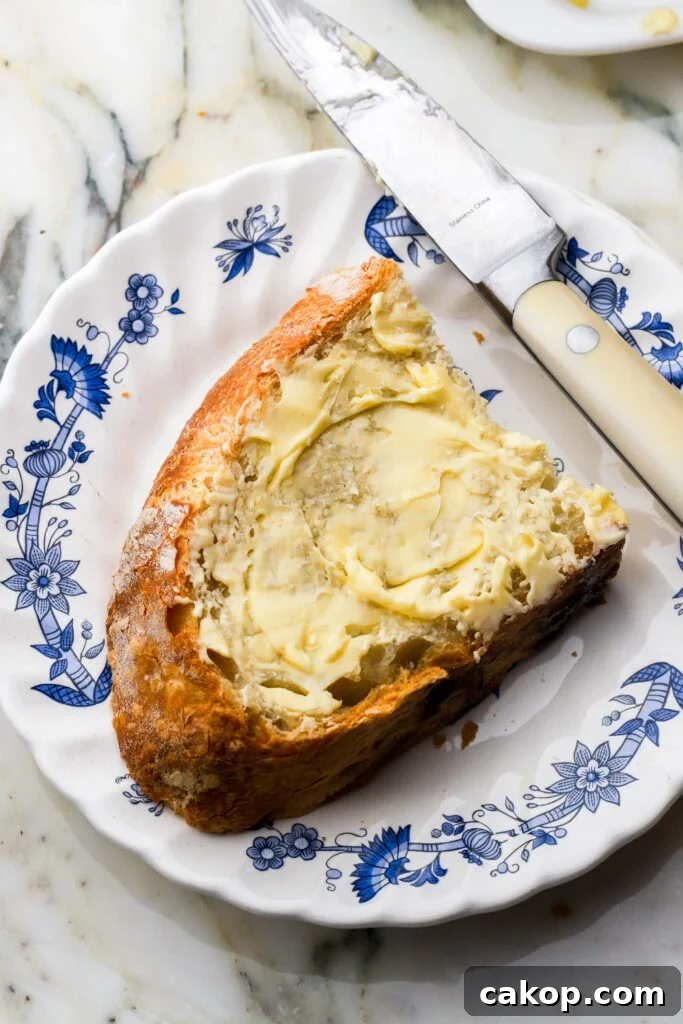
- Warm with good butter and flaky sea salt—simple and perfect.
- Toasted for sandwiches or avocado toast; it toasts beautifully and holds fillings well.
- As a side to soups, stews, or saucy dishes—excellent for soaking up sauces and juices.
How To Slice So It Doesn’t Squish
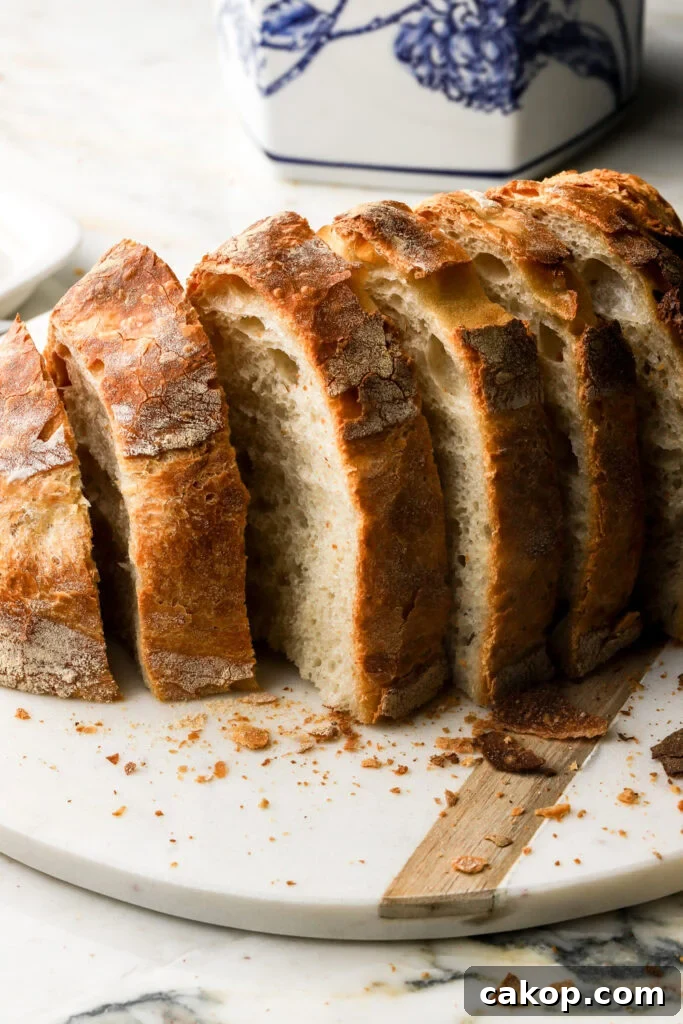
Let the bread cool at least 75% before slicing to avoid a gummy texture. To slice without compressing the crumb, cut the loaf in half with a serrated knife, place the cut side down, and slice through the crust—this preserves the loaf’s structure.
Storing
Fresh is best, but this loaf keeps well. Store at room temperature in a sealed bag for a few days, refrigerate up to a week, or freeze for longer storage. Reheat refrigerated slices briefly in the microwave or toast them. If the bread dries out, toasting with butter or toppings revitalizes it.
Thanks for reading—happy baking!
Love, B
Italian Bread — Recipe
Prep: 20 mins | Cook: 35 mins | Total: ~18 hrs (including overnight rise)
Yields: about 16 slices
Rating: 4.89 from 26 votes
Equipment
- Dutch oven
- Stand mixer (optional)
Ingredients
- 450 mL water, room temperature
- 600 g bread flour (or a mix of bread and all-purpose)
- 1/2 tsp active dry yeast (or instant yeast)
- 15 g fine sea salt
- 28 g salted butter (softened or melted) or oil
Method
- In a large bowl or mixer, combine water, flour, yeast, salt, and butter or oil.
- Mix until all flour is hydrated and a shaggy dough forms.
- Cover and rest 30–60 minutes.
- Perform a round of stretch-and-folds (four sides). Rest 30–60 minutes and repeat.
- Cover tightly and let rise overnight at room temperature (about 10–12 hours total).
- In the morning, turn dough onto a floured surface, shape into a tight ball, and place on crumpled parchment in a bowl. Proof 60–90 minutes.
- Preheat the oven with the Dutch oven inside to 425–450°F (220–232°C).
- Score the loaf, transfer (on parchment) into the hot Dutch oven, add a few ice cubes around the dough, cover, and bake 15 minutes covered, then 20–25 minutes uncovered.
- Cool on a wire rack before slicing.
Notes
I slightly reduced the water compared to some no-knead recipes to make the dough more manageable. You can refrigerate the dough for a cold retard of 18–72 hours for deeper flavor.
Nutrition (per slice)
Calories: 148 kcal | Carbs: 27 g | Protein: 5 g | Fat: 2 g