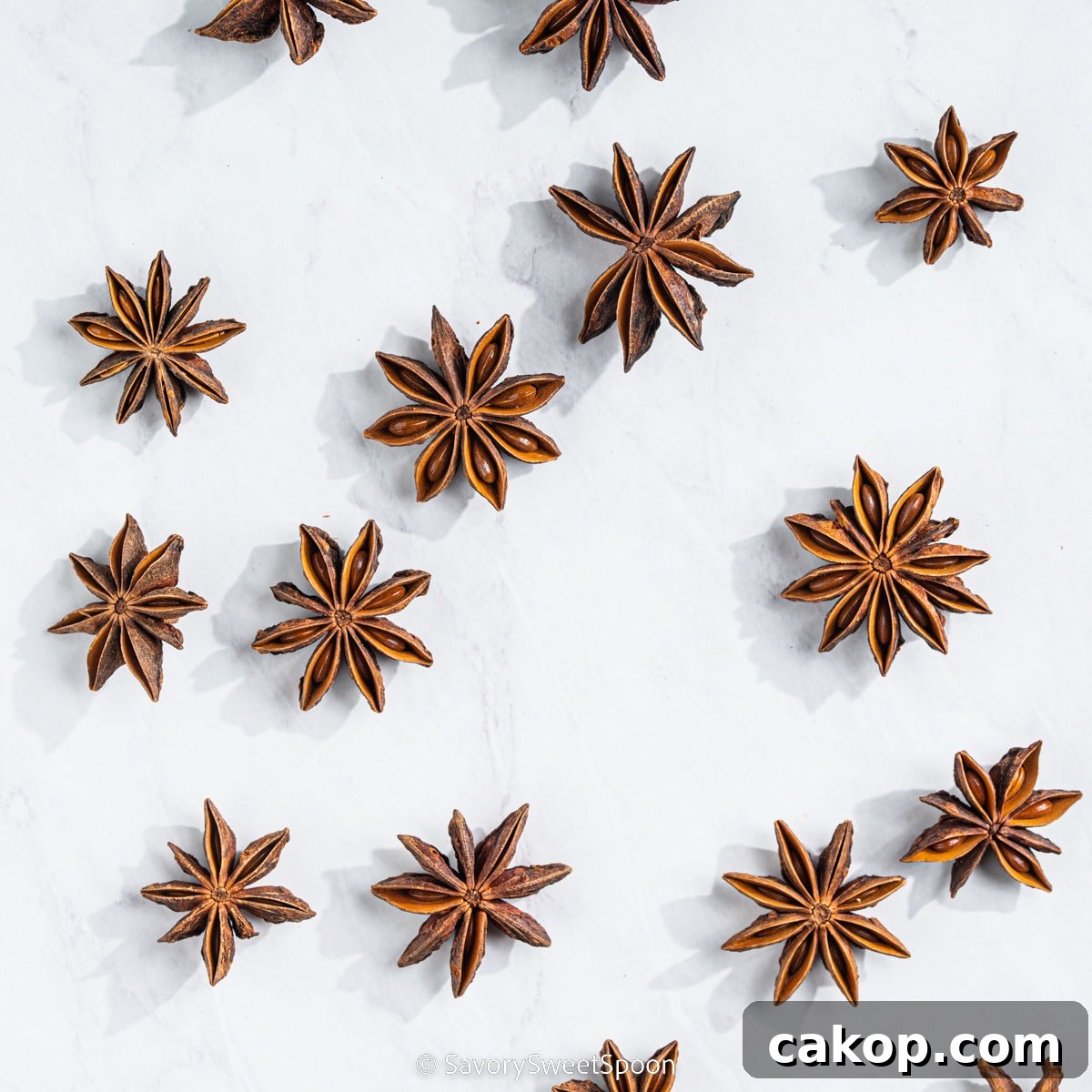
Do you need a star anise substitute? If you’re midway through a recipe and realize you don’t have star anise, don’t panic. Several common spices can replicate its warm, aromatic profile or provide a complementary flavor so your dish still turns out delicious. Below are practical alternatives, how to use them, and when each works best.
What is Star Anise?
Star anise is the dried fruit of Illicium verum, notable for its star-shaped pods that each hold a seed. It has a distinctive sweet-licorice flavor and is widely used in both sweet and savory cooking, especially across Asian cuisines. Star anise appears in spice blends and broths—where its perfume-like quality enhances soups, stews, sauces, and marinades.
Best Star Anise Substitutes
1. Anise Seeds
Anise seeds (from Pimpinella anisum) share the closest licorice-like flavor to star anise. They work well in soups, stews, baked goods, and sauces. Substitute anise seeds for star anise at a 1:1 ratio—use crushed or ground seeds if the recipe calls for a powdered spice, or whole if you’ll infuse and remove them later.
2. Fennel Seeds
Fennel seeds (Foeniculum vulgare) are milder and slightly sweeter but still carry a licorice note. They make a good, widely available swap for star anise in both savory and sweet recipes. Use fennel seeds 1:1 as a starting point, crushing or grinding them to release flavor, and adjust to taste.
3. Chinese Five Spice Powder
Chinese five-spice powder typically contains star anise along with cinnamon (cassia), cloves, fennel, and Szechuan peppercorns. It brings a complex, rounded flavor and is an excellent substitute in sauces, marinades, and braises. Use it at a 1:1 ratio, keeping in mind the blend adds additional spice notes beyond pure anise.
4. Cinnamon + Cloves
A simple combination of cinnamon and cloves can approximate the warm, spiced character of star anise when the licorice note isn’t essential. This blend is especially useful in baking, stews, and some sauces. Start with equal parts cinnamon and ground clove, tasting and adjusting to suit the recipe.
5. Allspice
Allspice (from Pimenta dioica) offers warmth and a mix of cinnamon, clove, and nutmeg-like flavors. It won’t reproduce the licorice quality, but it provides aromatic depth that works well in both savory dishes and desserts. Substitute allspice 1:1 and tweak the amount based on the dish.
6. Cardamom
Cardamom brings strong aromatic, citrusy, and herbal notes that add complexity where star anise is called for, even though it lacks a direct licorice taste. It’s a good choice in curries, rice dishes, and certain baked goods. Use ground or crushed cardamom in a 1:1 ratio, adjusting for potency.
7. Nutmeg
Nutmeg supplies warm, slightly sweet, nutty spice and can stand in for star anise when a general warming background note is desired. It doesn’t deliver licorice flavor but complements many recipes that call for star anise. Substitute nutmeg 1:1 and adjust to taste.
FAQ about Star Anise
Anise seeds are the best direct substitute in soups and broths because they closely match the licorice aroma of star anise. Use them in a 1:1 ratio, crushing slightly to release flavor, and adjust to achieve the desired strength.
Ground anise seeds work best in baking for a similar licorice note. Replace star anise with ground anise seeds 1:1 and taste as you go. Fennel seeds or a cinnamon-clove mix can also work when anise isn’t available.
Chinese five-spice powder is a convenient substitute for sauces and marinades because it already contains star anise and complementary spices. Use it 1:1, but remember it will introduce a broader spice profile to the dish.