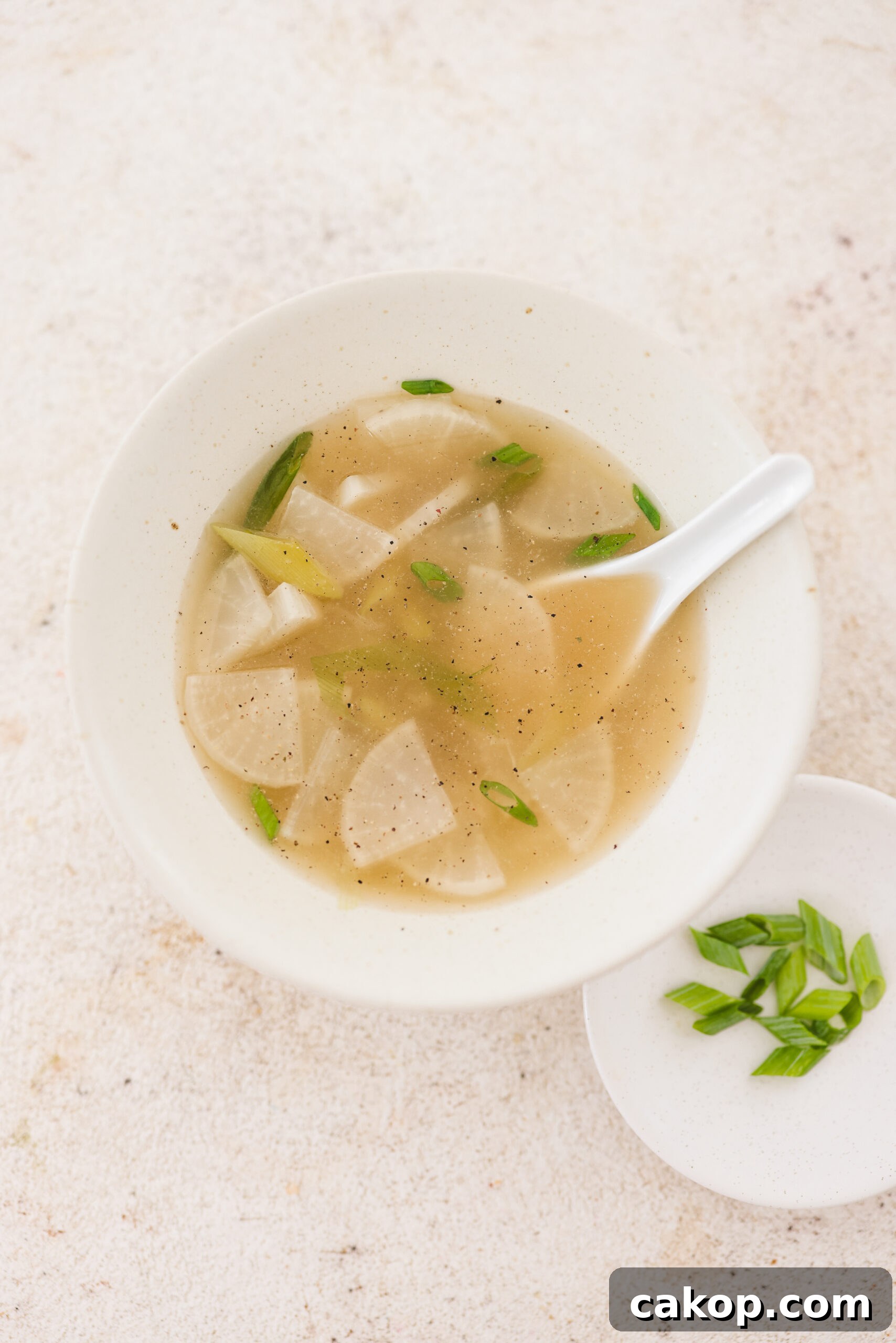
This healthy Korean Radish Soup (Mu Guk) is a simple, satisfying vegan recipe featuring tender daikon in a savory kombu-garlic broth, finished with green onion and sesame seeds.
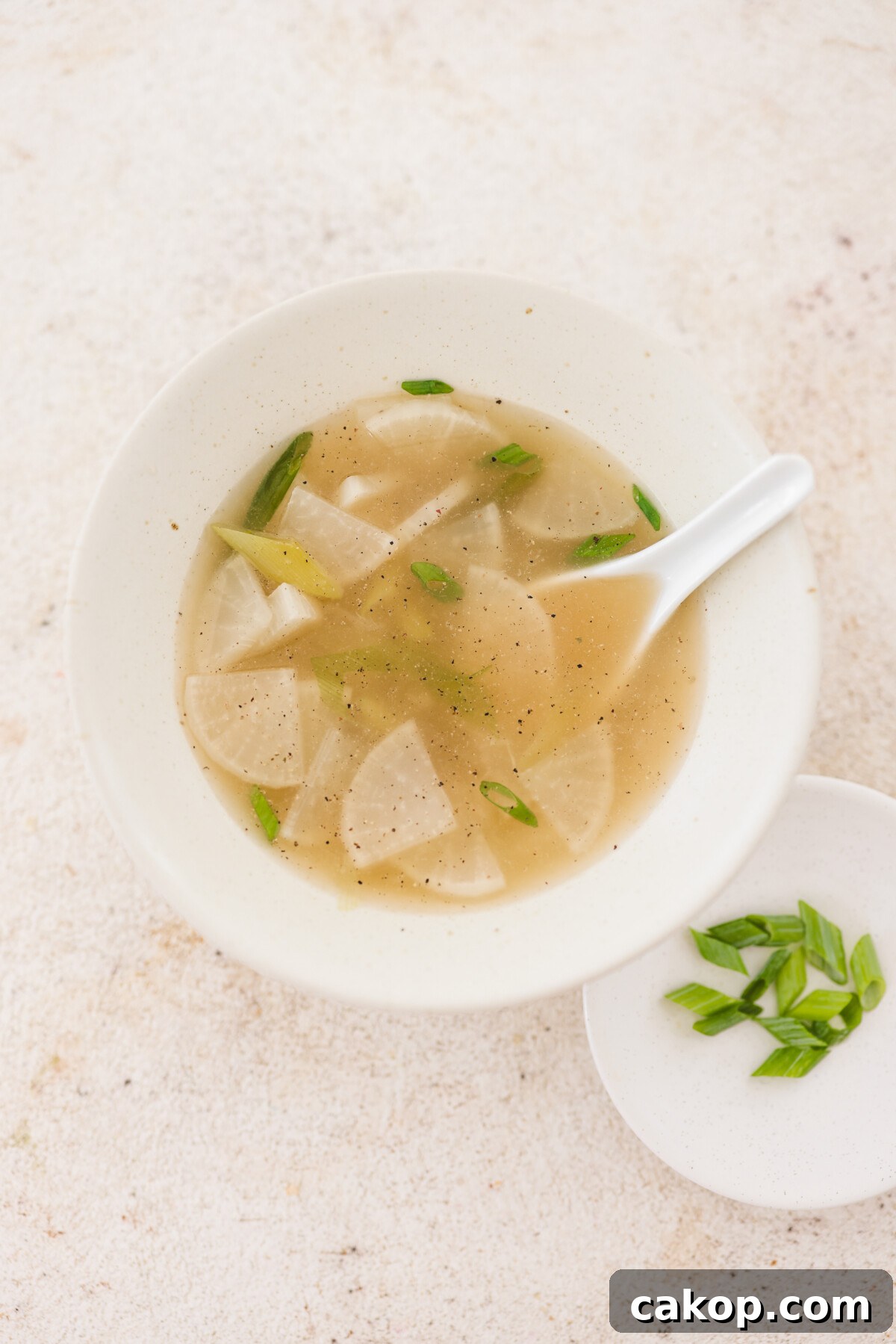
What Makes This Recipe Great
This comforting Korean soup delivers deep savory and umami flavors without meat. While traditional mu guk often uses beef, a well-made kombu and shiitake-based broth gives this vegan version plenty of depth so you won’t miss animal protein. The daikon becomes tender and almost potato-like, while garlic and green onion add brightness. It’s an excellent option when you want a warm, nourishing one-pot meal.
This soup also improves after a day in the fridge—leftovers develop even more flavor—so it works well for meal prep.
How to Make Vegan Korean Radish Soup
The ingredient list is short and the method is easy. This mu guk comes together in one pot and requires minimal active time, making it a quick, homey dinner or lunch.
Ingredient Notes
The radish is the star. Use the larger Korean/daikon variety rather than small spicy radishes, and include kombu and dried shiitake for a savory broth base. Here’s what you’ll need:
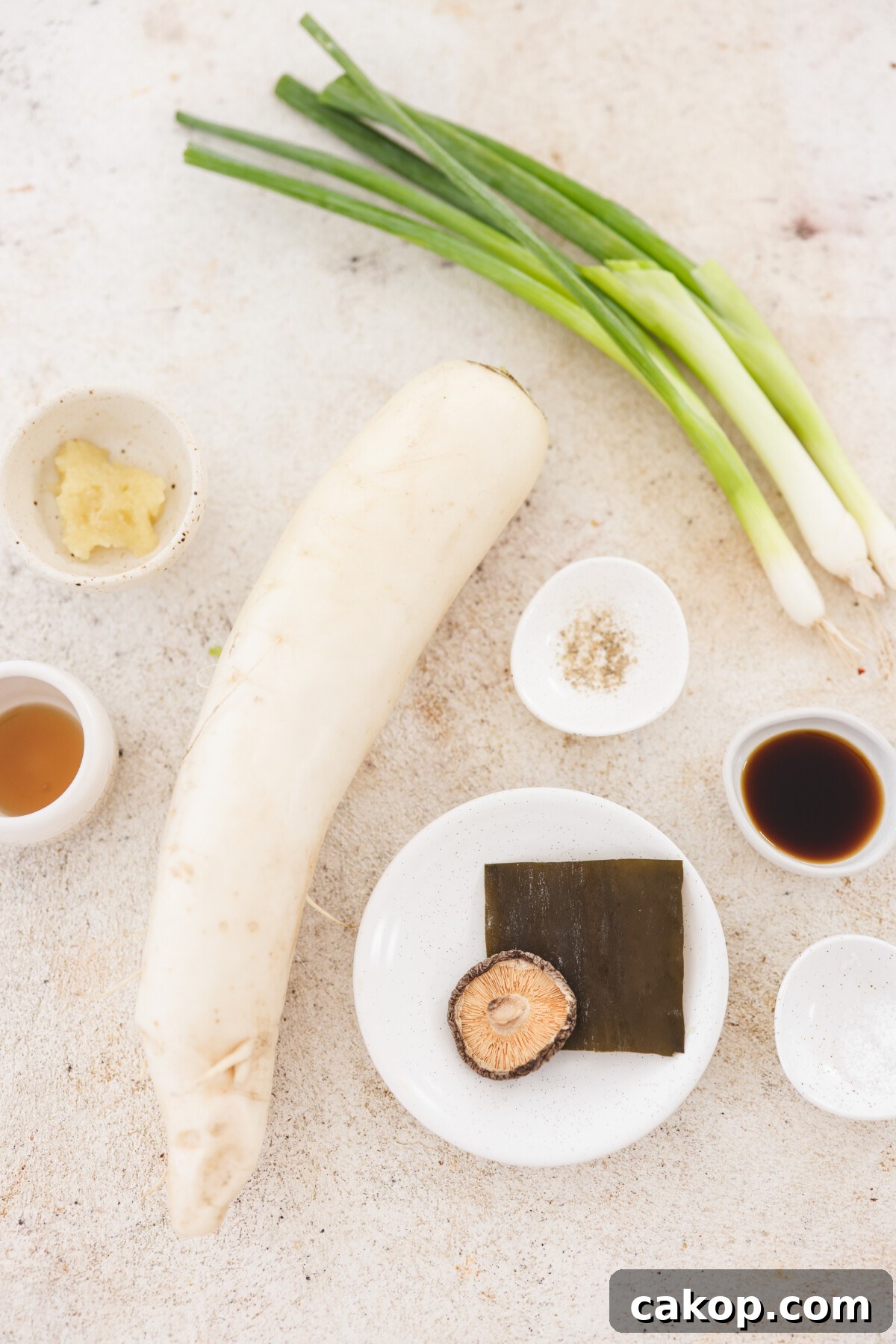
- Korean radish (daikon) — large white radish with a mild, slightly sweet flavor; provides body and base flavor for the soup.
- Kombu (kelp) — a small sheet of dried kelp adds umami to the broth.
- Dried shiitake mushroom — deepens the savory profile.
- Green onion — sliced diagonally for freshness and color.
- Garlic — minced, for antioxidant-rich aroma and flavor.
- Soy sauce or tamari — use gluten-free tamari if needed; adjust quantity to taste.
- Sesame oil and sesame seeds — a little toasted sesame oil for nuttiness and seeds for garnish.
- Water or vegetable broth — as the cooking liquid.
Step-by-Step Instructions
- Peel and cut the radish into bite-sized triangular pieces.
- Heat sesame oil in a pot over medium-high heat. Sauté the radish 2–3 minutes until it becomes slightly translucent. Add the green onions and cook a few more minutes until fragrant.
- Add the kombu, dried shiitake, minced garlic, and water (or vegetable broth). Bring to a boil, then reduce heat and simmer 12–15 minutes until the radish is tender.
- Remove the kombu if you prefer, then add soy sauce (or tamari) and salt to taste. Simmer another 2–3 minutes to meld flavors.
- Ladle into bowls and garnish with sesame seeds, extra white or black pepper if desired, and fresh sliced green onion.

Expert Tips
- Choose a large Korean/Asian daikon rather than small spicy radishes—mu guk relies on the sweeter, meatier texture of daikon.
- Find kombu and dried shiitake at Asian grocery stores; they add essential umami to a vegan broth.
- If you want additional texture or protein, sauté a vegan “beef” alternative or tofu with the radish before adding the liquid.
Serving Tips
This soup is naturally vegan, but you can add protein while keeping it plant-based. Lightly sauté tofu, a vegan beef-style substitute, or seitan (if not gluten-free) and add it to the pot so it soaks up the broth.
Good additions:
- Tofu
- Vegan beef alternative
- Seitan (for non–gluten-free diets)
Storage Tips
- Refrigerate leftovers in an airtight container for up to 4 days. Reheat gently on the stovetop or in the microwave.
- Freeze portions in a freezer-safe container for up to three months. Thaw overnight in the fridge before reheating.
Recipe FAQs
Yes. Make a large batch, cool, and portion into meal-prep containers. It keeps up to four days in the refrigerator and reheats well on the stove or in the microwave.
Yes. Daikon radishes are nutrient-rich and the simple, mostly plant-based ingredients make this soup nourishing and light. Adding tofu boosts protein content.
More Delicious Korean Soup Recipes
Simple Vegan Udon Soup
Chilled Korean Soybean Soup
Korean Kale and White Bean Soup
Korean Tofu Stew (Sundubu)
Korean Radish Soup (Mu Guk)
2 -3 servings

Ingredients
- 4 cups Korean radish daikon
- 2 tsp sesame oil
- 6 cups water or vegetable broth
- 1 post-it note sized piece of kelp/dashi kombu
- 1 dried shiitake mushroom
- 3 green onions sliced diagonally
- 3 cloves garlic minced
- 1-2 tbsp gluten free soy sauce or coconut aminos
- 1 tsp salt more to taste
- 1/4 tsp white pepper
- optional: vegan “beef” alternative
- sesame seeds for garnish
- fresh green onion sliced
Instructions
-
Peel and slice your radish, then dice into triangle shapes.
-
Bring a pot to medium-high heat, add sesame oil and sauté radish for 2–3 minutes until slightly translucent. Add green onions and sauté another few minutes until fragrant.
-
Add the kombu, dried shiitake, garlic, and water or vegetable broth. Bring to a boil, then simmer 12–15 minutes until radish is tender.
-
Remove kombu if desired, then add soy sauce and salt to taste. Simmer 2–3 more minutes.
-
Garnish with sesame seeds, white or black pepper, and fresh green onion before serving.
Notes
Expert Tips
- Use a large Korean/Asian daikon for the right sweetness and texture.
- Find kombu and dried shiitake at Asian grocery stores for best flavor.
- This vegan version captures deep umami so you don’t miss the traditional beef.
Serving Tips
To add protein while keeping the soup vegan, sauté tofu or a vegan beef alternative with the radish before adding liquid.
Try adding:
- Tofu
- A vegan beef alternative
- Seitan (if not gluten-free)
Storage Tips
- Refrigerate in an airtight container up to 4 days. Reheat gently.
- Freeze in a freezer-safe container up to three months; thaw overnight before reheating.
Nutrition information is automatically calculated and should be used as an approximation.
Did you make this recipe?
Tag @veggiekins on Instagram and hashtag it with #veggiekins