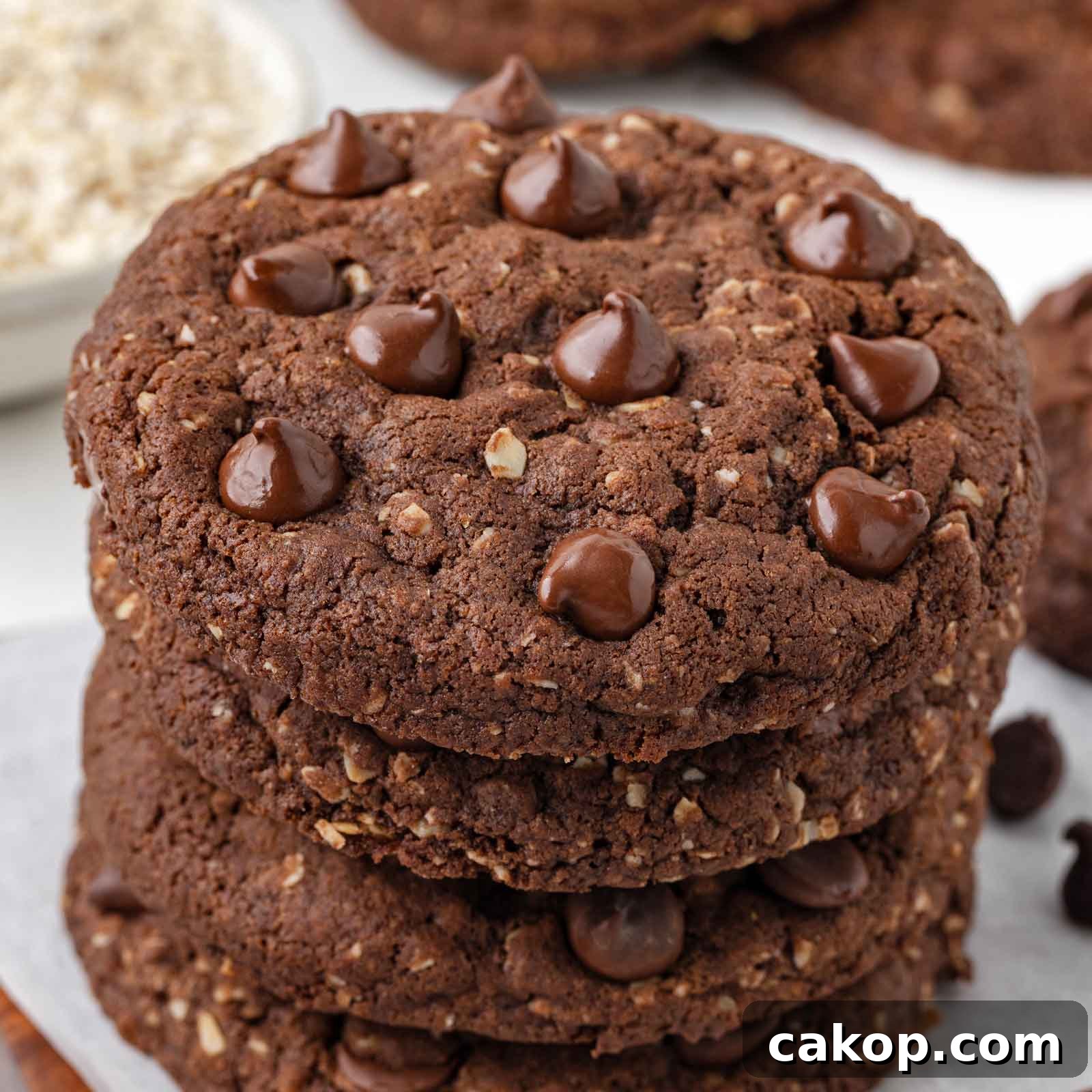
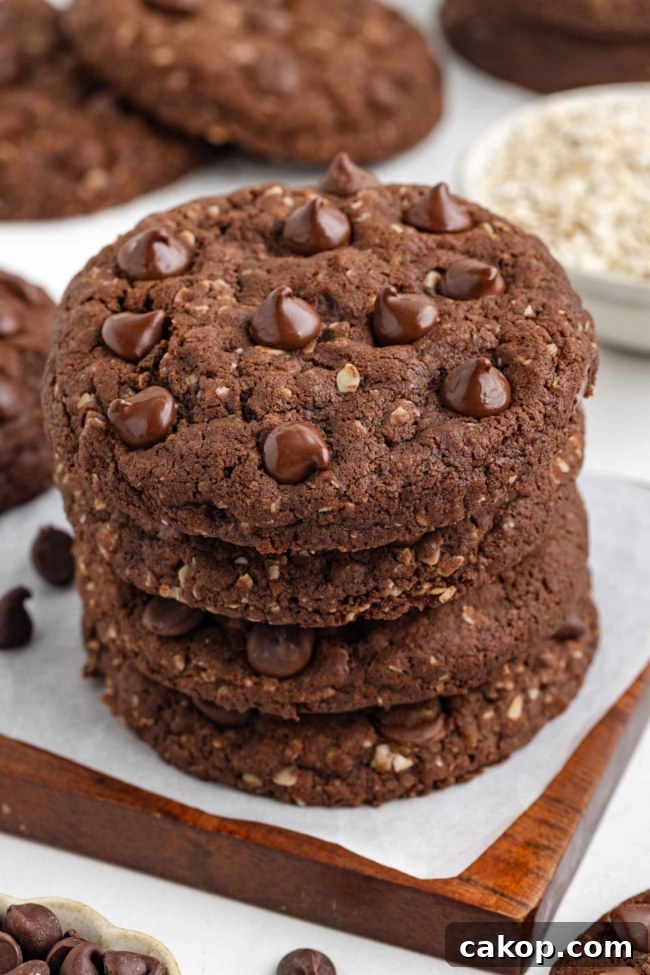
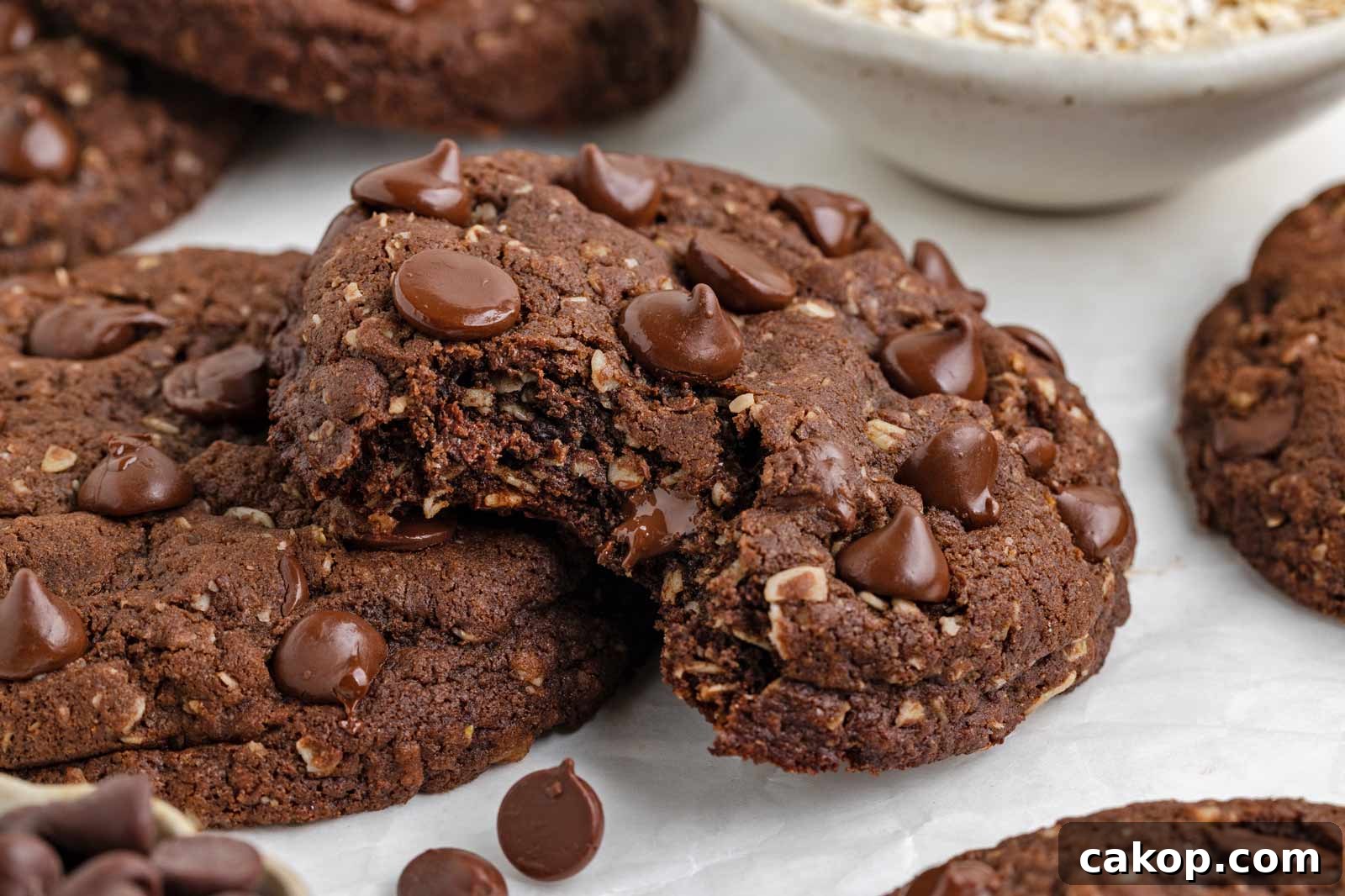
These cocoa oatmeal cookies are soft, chewy, and lightly chocolatey, with a flavor closer to hot cocoa than intense dark chocolate. Using natural cocoa powder keeps the cookies tender and balanced rather than heavy or overly rich. The recipe is adaptable — make them traditional, gluten-free, vegan, or dairy-free depending on your needs.
This version is adapted from a simple oatmeal-cookie base, with adjusted ratios to accommodate cocoa powder and a slightly reduced oat volume so the cookies stay moist instead of dry. The result is a thick, sturdy cookie with a tender chew that holds up well while remaining soft.
I use natural (non-alkalized) cocoa powder in this recipe because it provides a brighter, slightly acidic chocolate note that evokes classic hot cocoa. Natural cocoa is lighter in color and flavor than Dutch-process cocoa and pairs nicely with oats and chocolate chips without overpowering them. If you prefer a deeper color and richer chocolate taste, you can experiment with Dutch-process cocoa, but you may need to tweak the leavening for best results.
What’s To Love
- Soft, chewy texture that stays tender for days
- No butter required
- Easy to portion and freeze for later baking
- A great twist for oatmeal-cookie lovers who want a milder cocoa flavor
Ingredient Notes
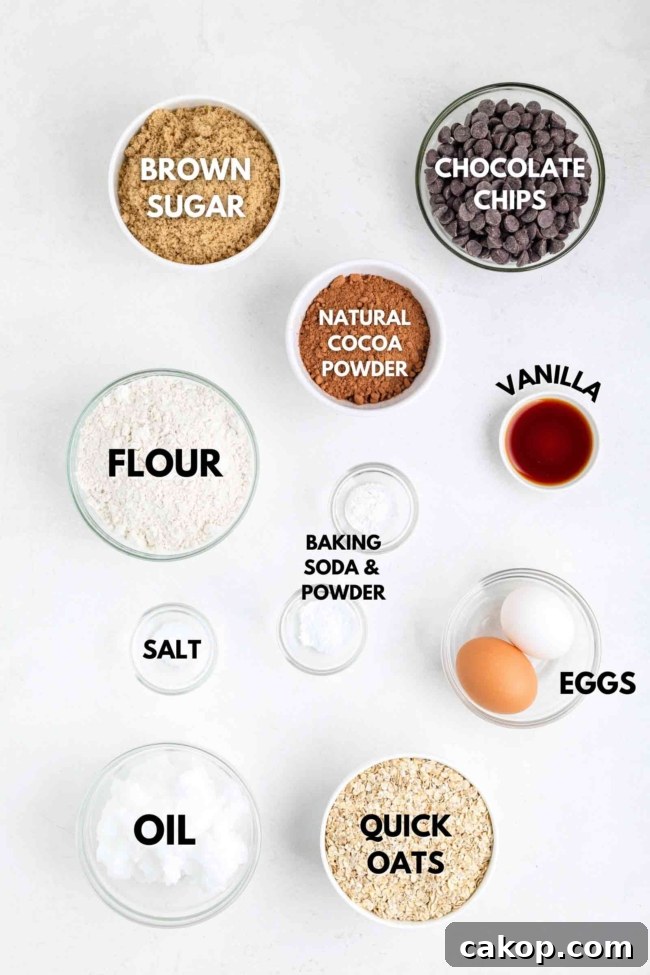
Scroll to the recipe card for full measurements and instructions. These notes highlight a few ingredient choices that affect texture and flavor.
- Flour – Use whole wheat, all-purpose, or a gluten-free 1:1 baking blend. A measure-for-measure gluten-free flour works well if you need a gluten-free cookie.
- Natural cocoa powder – Offers a lighter color and the classic “hot cocoa” flavor. Dutch-process cocoa will deepen color and flavor but can affect dough chemistry and may require leavening adjustments.
- Oil – Neutral oils such as vegetable, canola, or grapeseed work fine. Refined coconut oil (firm, not melted) is a good option because it won’t add coconut flavor and helps the cookies hold shape. Butter can be used but will produce a cakier cookie with less chew.
- Quick oats – Quick oats give a softer, more cohesive cookie. Old-fashioned rolled oats will create a drier, chewier texture, so quick oats are recommended for this recipe.
- Brown sugar – Adds moisture and chewiness. Replacing it with white sugar will change texture; coconut sugar can be used but tends to make cookies drier.
How to Make Them
These cookies use straightforward techniques and standard kitchen tools.
- Preheat oven to 350°F (175°C) and line a baking sheet with parchment paper.
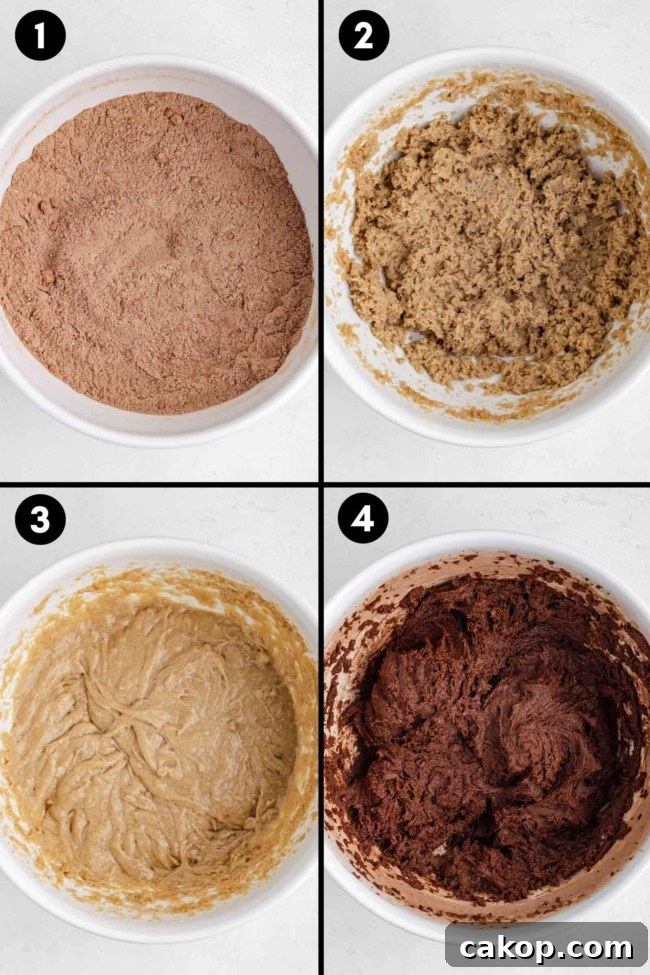
- Whisk the dry ingredients together in a bowl until evenly combined.
- In a large bowl, beat the oil and brown sugar together until smooth.
- Mix in the eggs and vanilla.
- Add the dry ingredients and mix just until combined.
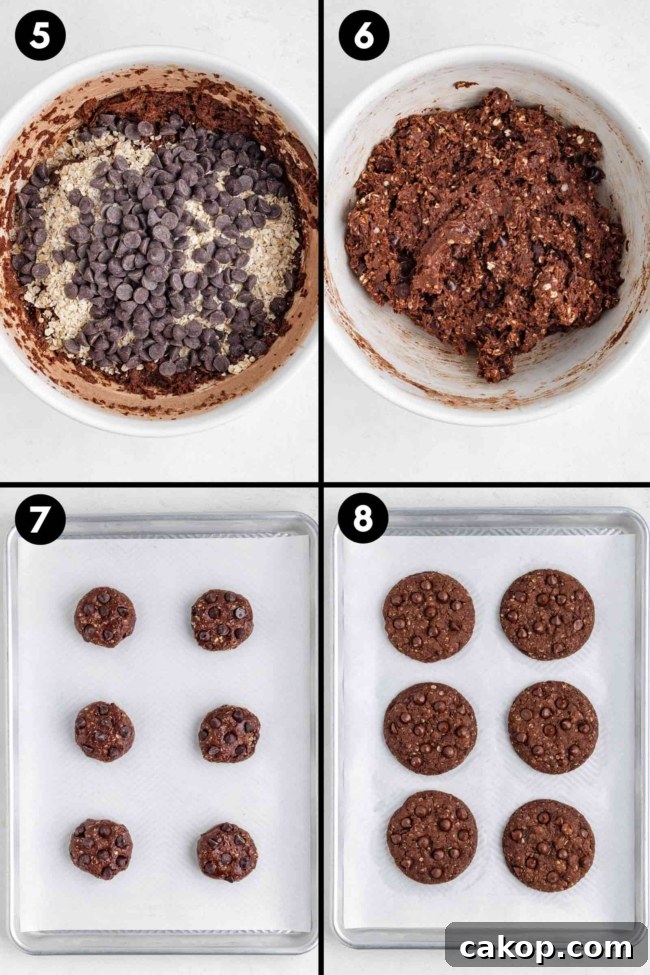
- Stir in the quick oats and most of the chocolate chips, folding until evenly distributed.
- Portion the dough into large balls (about 75 g each), place them on the prepared sheet 4 inches apart, flatten slightly, and press extra chocolate chips on top.
- Bake about 10 minutes or until the centers appear set. The cookies will be extremely soft when hot; let them cool completely on the baking sheet. They take several hours to fully firm up (around 3 hours is typical), so resist moving them while warm.
Tips for Success
- If using coconut oil, make sure it’s firm (not softened) so the dough doesn’t spread excessively while baking.
- Measure flour and oats accurately — spoon and level or use a kitchen scale to avoid dry cookies.
- Don’t overbake. The centers should look set but still soft; they firm up as they cool.
Make Ahead, Storage and Freezing
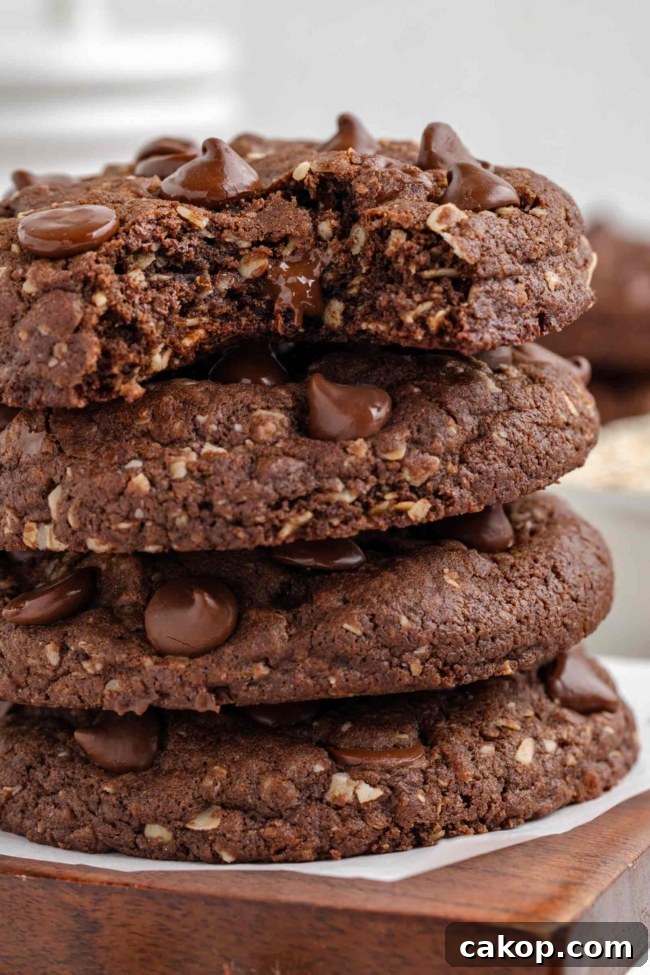
These cookies store well at room temperature. Keep baked cookies in an airtight container for up to 5 days — they remain soft and chewy.
You can freeze portioned dough balls on a baking sheet, then transfer them to a freezer bag. Bake from frozen, adding 1–2 minutes to the bake time as needed.
Troubleshooting
- Cookies spread too much – dough was likely too warm. Chill the dough for 15–20 minutes before baking.
- Cookies seem underbaked – they firm up significantly as they cool. Avoid adding extra bake time that would dry them out.
- Dry cookies – too much flour or oats can cause dryness. Measure carefully, or use a scale for consistency.
- Cookies fall apart – allow them to cool completely (several hours) on the baking sheet before handling.
Gluten-free, vegan and dairy-free options
For gluten-free baking, use a reliable gluten-free 1:1 flour blend that replaces all-purpose flour by volume. If you need dairy-free or vegan cookies, choose oil instead of butter and use plant-based chocolate chips. For a vegan egg substitute, use two chia eggs: mix 2 tablespoons ground chia seed with 6 tablespoons water and let thicken until egg-like, then use in place of 2 large eggs.
🍪 Have you tried these cocoa oatmeal cookies? 🍪
Please leave a review and rating to share how they turned out. Your feedback is appreciated!
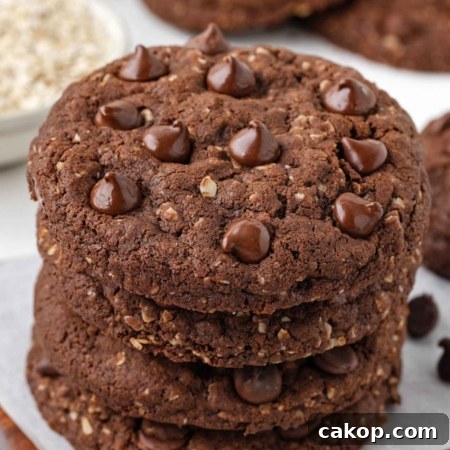
Cocoa Oatmeal Cookies
Ingredients
- 1 1/2 cups (190 grams) whole wheat, all-purpose, or gluten-free 1:1 flour
- 1 teaspoon baking soda
- 1 teaspoon baking powder
- 1/2 teaspoon salt
- 1 cup (225 grams) oil (see notes)
- 1 1/3 cups (266 grams) brown sugar
- 2 large eggs (or 2 chia eggs for vegan)
- 1 tablespoon vanilla extract
- 2 cups (186 grams) quick oats (use gluten-free oats if needed)
- 1/2 cup (55 grams) natural cocoa powder (not Dutch-process)
- 1 1/4 cups (212 grams) semi-sweet chocolate chips, divided
Instructions
-
Preheat oven to 350 °F (175 °C). Line a baking sheet with parchment paper.
-
Whisk together flour, baking soda, baking powder, salt, and cocoa powder. Set aside.
-
In a large bowl, beat oil and brown sugar until smooth. Mix in eggs and vanilla.
-
Add the dry mix to the wet ingredients and beat just until combined. Stir in the quick oats and about 1 cup of the chocolate chips, folding until combined.
-
Form dough into fifteen 75-gram balls (about 2 inches / slightly over 1/4 cup each). Place on the prepared sheet 4″ apart.
-
Flatten each ball slightly and press remaining chocolate chips into the tops.
-
Bake 10 minutes or until the centers appear set. Let cool completely on the baking sheet; cookies need several hours to fully firm up. Store in an airtight container for up to 5 days.
Notes
- If you need gluten-free, use a reliable gluten-free measure-for-measure flour blend. Results can vary by brand.
- Use a neutral oil (or firm refined coconut oil) to help the cookies hold their shape. If you use butter, expect a softer, cakier texture.
- Nutrition values are estimates provided for convenience and may not be precise.