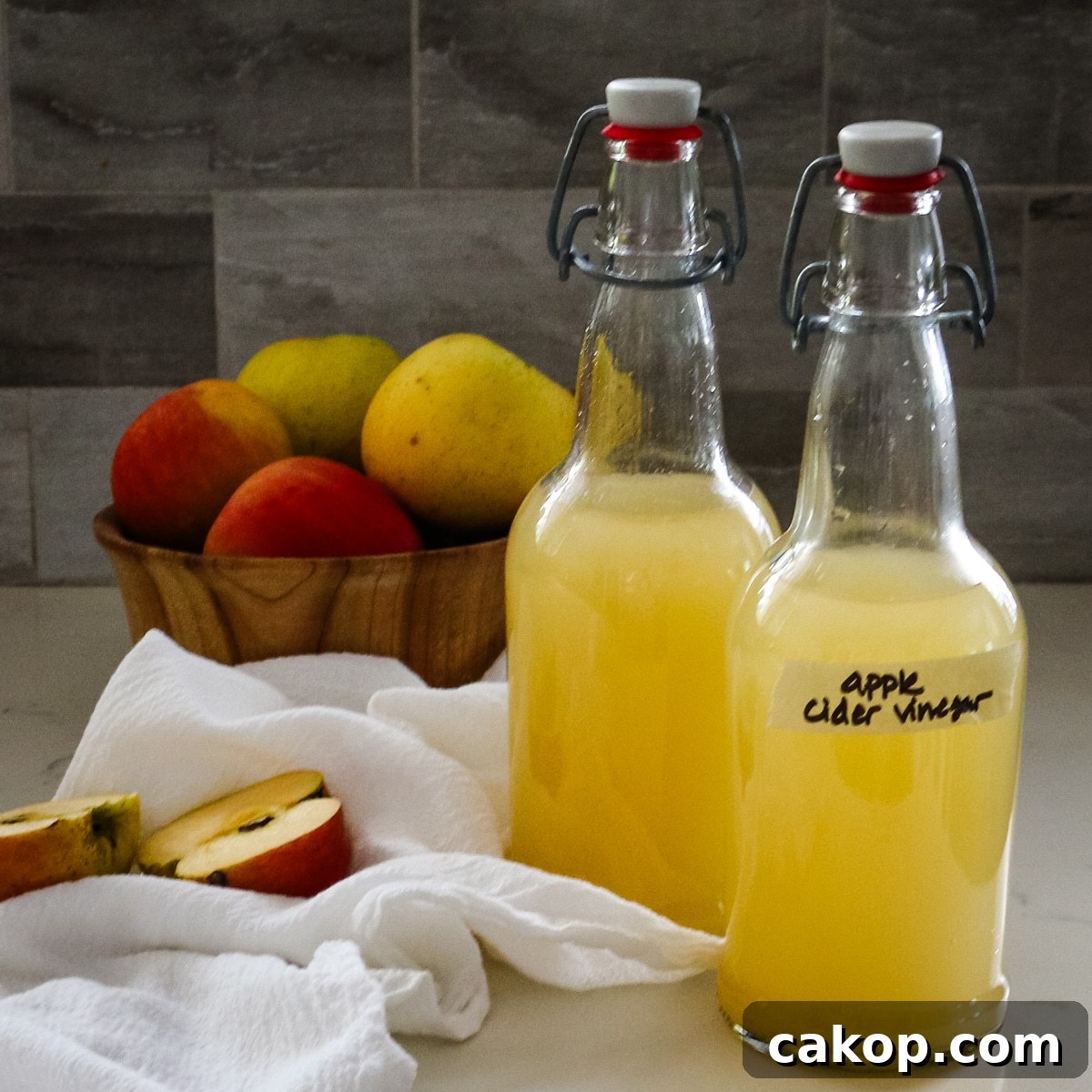
Learn how to make apple cider vinegar using whole apples or leftover cores and peels. A small amount of sugar and water kickstarts natural fermentation, producing tangy vinegar with the mother. Use it for dressings, marinades, cleaning, or everyday rituals.
💡Recipe Overview
- Prep and Cook Time: 15 minutes prep, 3–5 weeks ferment
- Cooking Method: Fermentation
- Dietary Info: Paleo, Primal, GAPS, Ancestral diet
- Tools Needed: Large jar, fermentation weight (optional)
- Skill Level: Easy
From Scraps to Staple
Homegrown or slightly imperfect apples are ideal for this recipe. You can use whole apples or save peels and cores from apples you already use in the kitchen. Turning scraps into apple cider vinegar reduces waste and yields a versatile staple you’ll reach for daily.
ACV works well in salad dressings, marinades, household cleaners, and small daily rituals. The process is straightforward: sugar and water feed natural yeasts that first create an alcoholic phase, then acetic bacteria convert alcohol into vinegar. Watching the transformation over a few weeks is simple and satisfying.

Ingredients for Apple Cider Vinegar Recipe
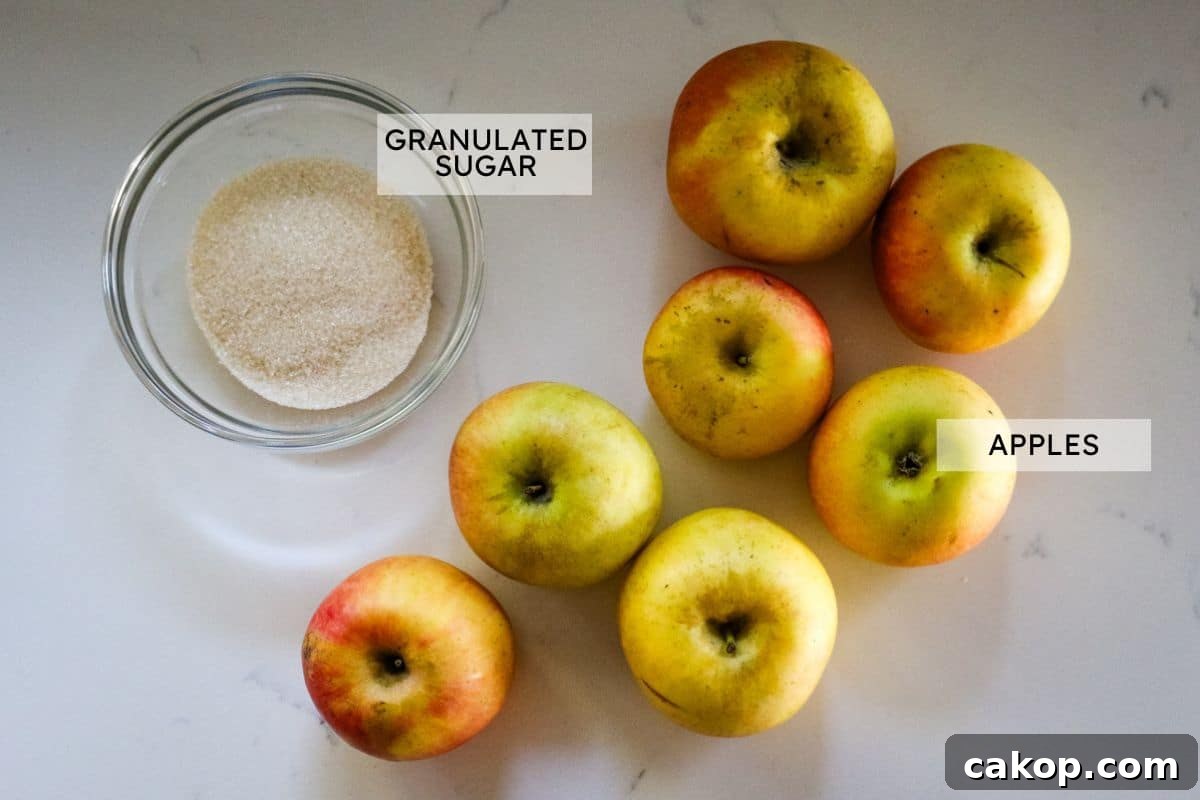
Choose sweet apples like Fuji, Gala, or Honeycrisp to provide plenty of natural sugar for fermentation. A few tart apples (Granny Smith) can add complexity. Organic apples are preferable if you’re using peels. You can either use 5–6 whole apples or the peels and cores from 8–10 apples.
Ingredients:
- 5–6 whole apples (or cores and peels from 8–10 apples)
- 1/4 cup granulated sugar
- 4 cups water (enough to fully cover the apples)

Naturally Ancestral
Fermenting fruit is an ancient preservation method. Making ACV at home uses wild yeasts and beneficial bacteria to transform apples into a probiotic-rich vinegar. Using whole apples — including cores and peels — reflects a whole-food approach common in traditional diets.
How to Make Apple Cider Vinegar
The printable recipe card below summarizes quantities and steps. Follow these instructions for reliable results.
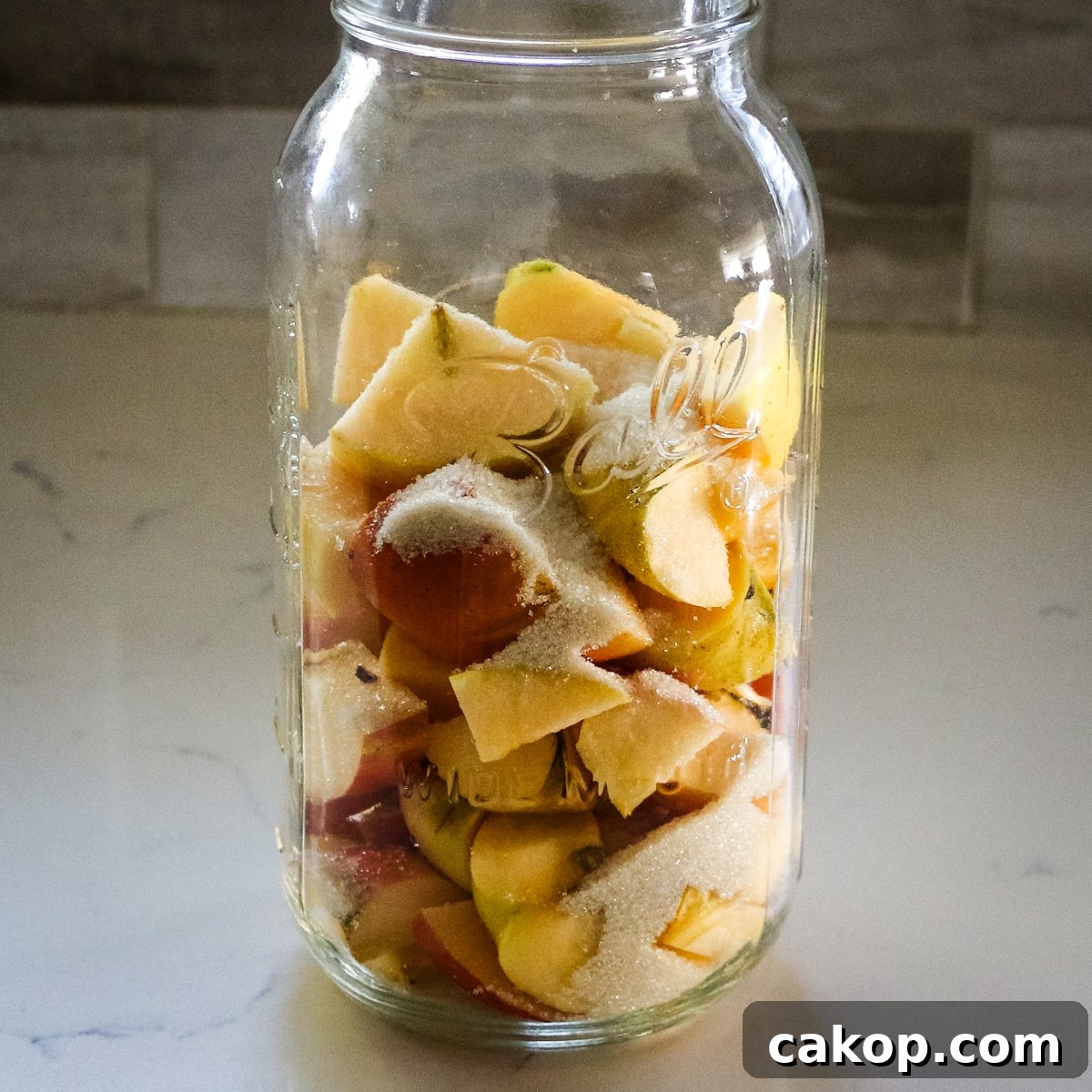
Step 1. Chop
Coarsely chop whole apples, or roughly chop cores and peels. Fill a clean jar about two-thirds to three-quarters full.
Step 2. Add Sugar & Water
Sprinkle 1/4 cup granulated sugar over the apples, then pour in water until all apple pieces are submerged. Stir with a wooden spoon to dissolve the sugar.
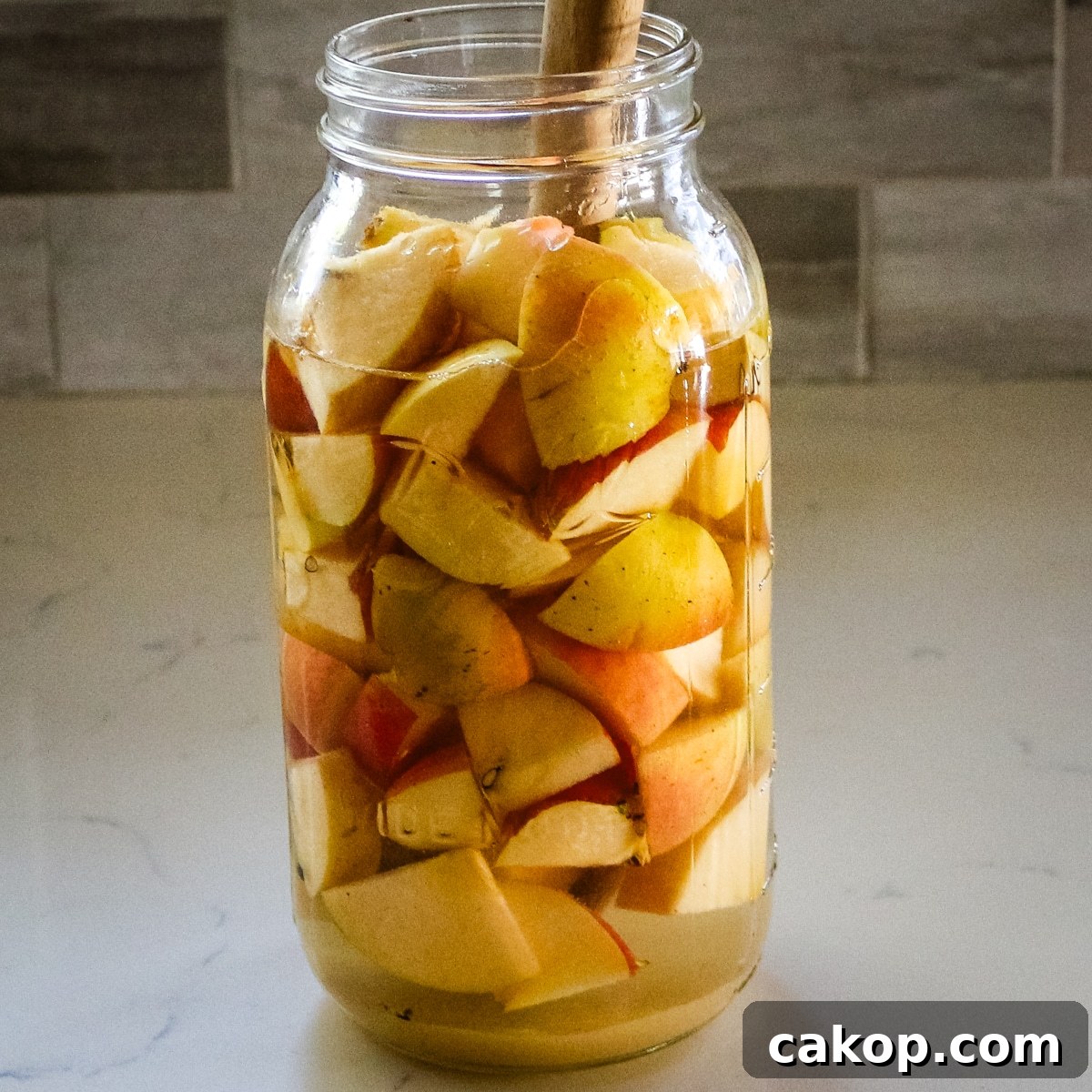
Step 3. Cover & Ferment (Stage 1)
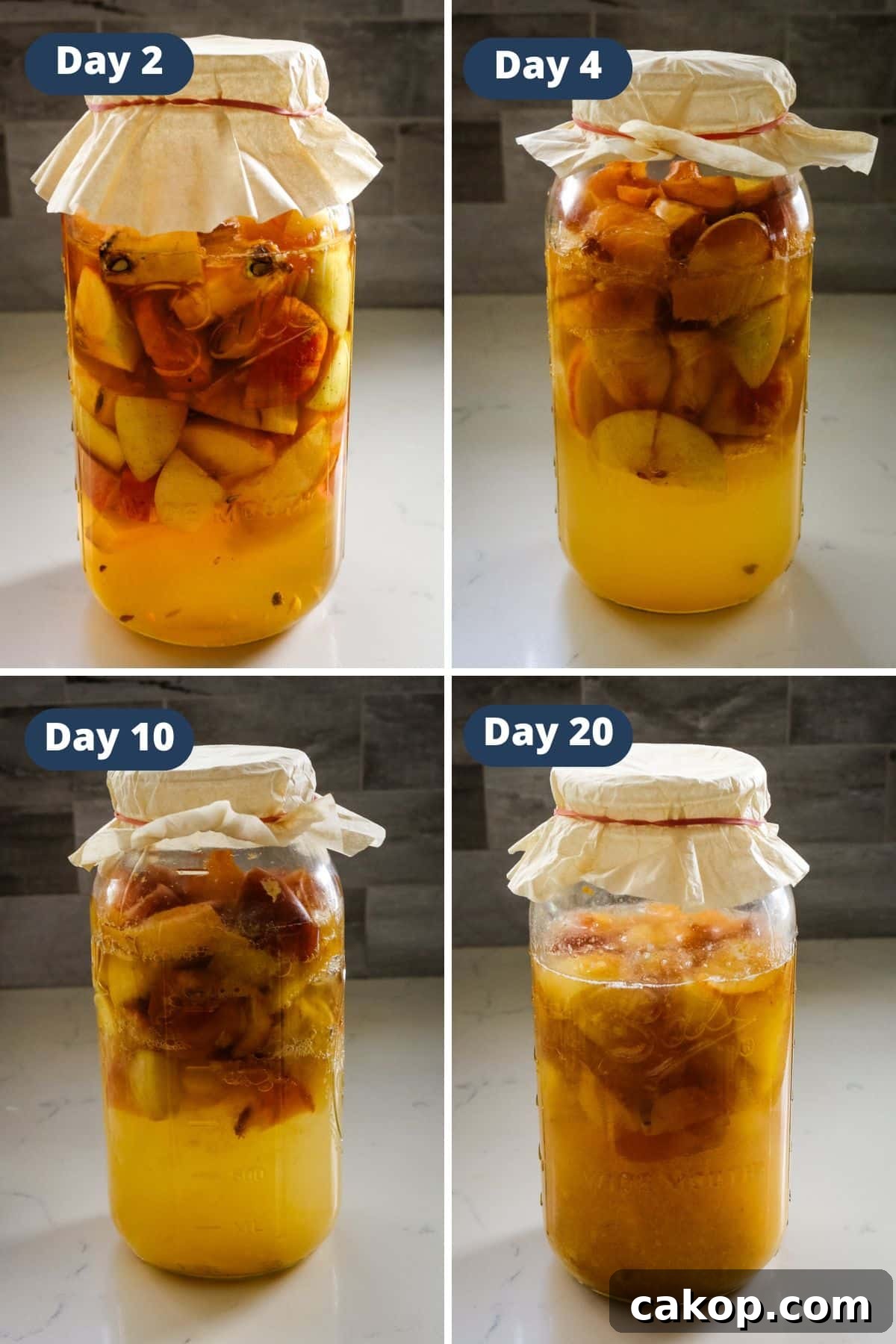
Cover the jar loosely with a kitchen towel or coffee filter secured by a rubber band to keep out dust while allowing air exchange. Place a fermentation weight or a small clean jar on top if pieces float. Store in a warm, dark spot for about 2 weeks, stirring daily to prevent mold and ensure oxygen reaches the apples.
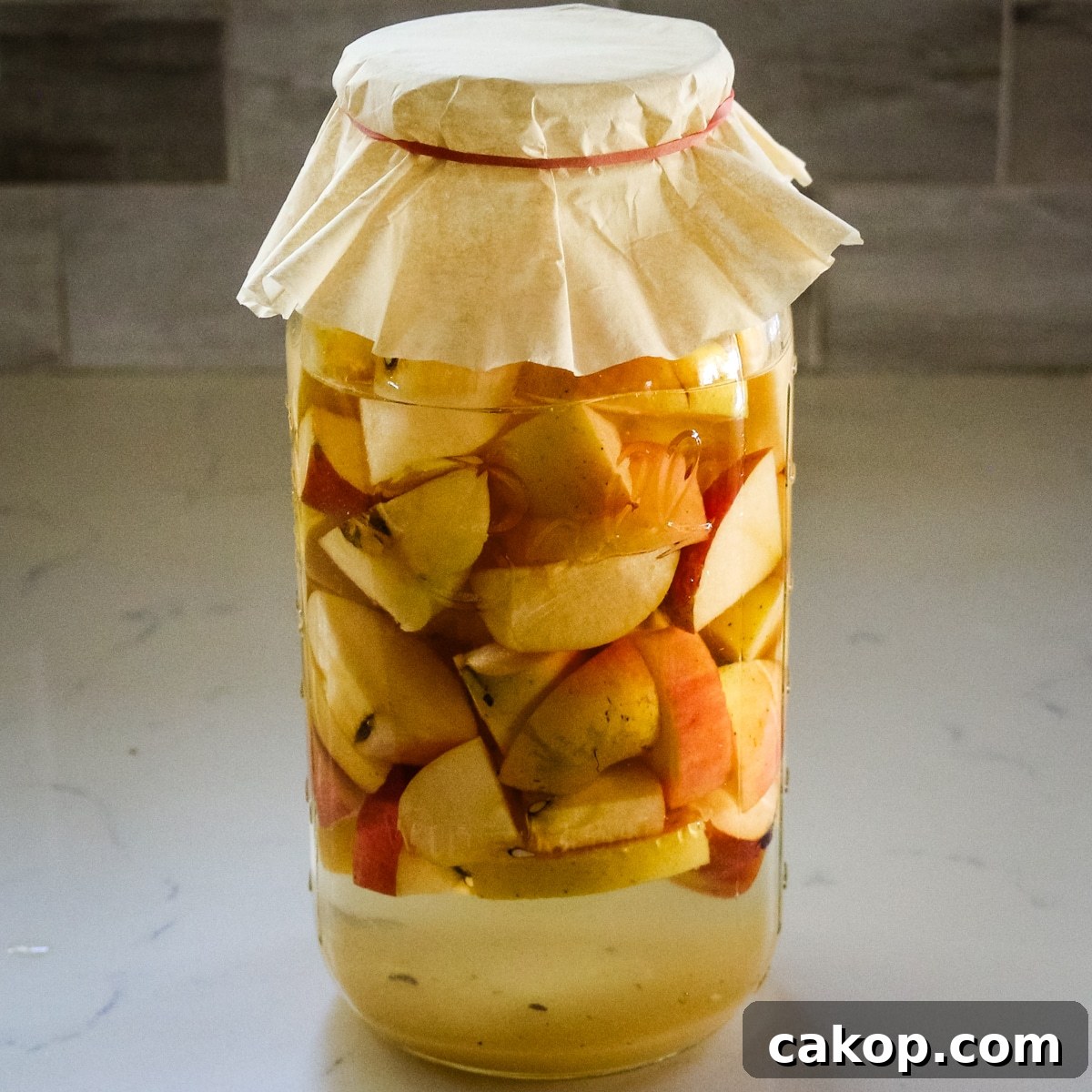
Step 4. Strain & Continue Fermenting (Stage 2)
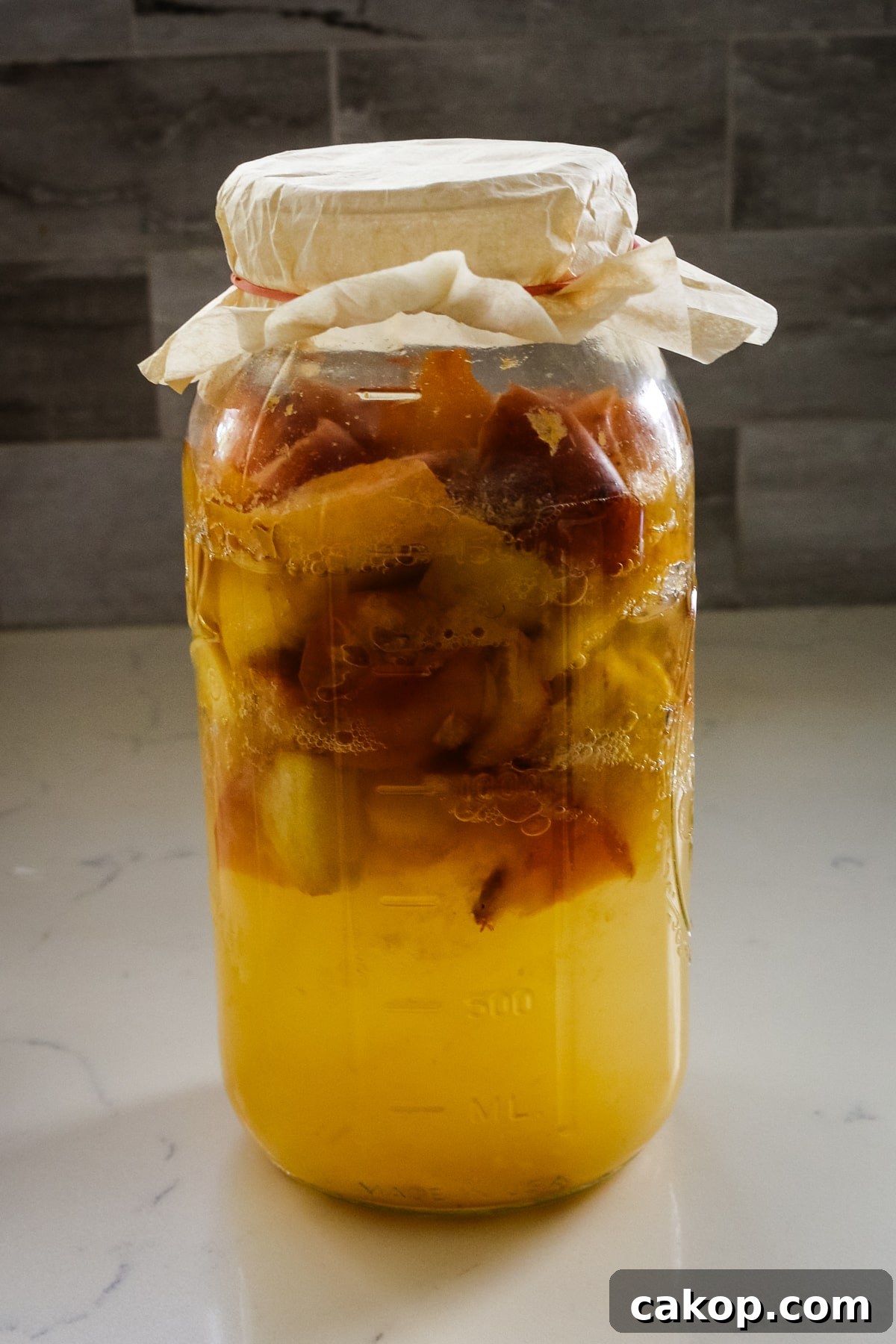
After ~2 weeks you’ll notice a cider-like aroma. Strain out solids and compost them. Return the liquid to the jar, cover again with a towel, and let it ferment for another 3–4 weeks (or longer in cooler temperatures). Stir now and then. When it tastes pleasantly tangy and vinegary, transfer to a sealed bottle for storage.
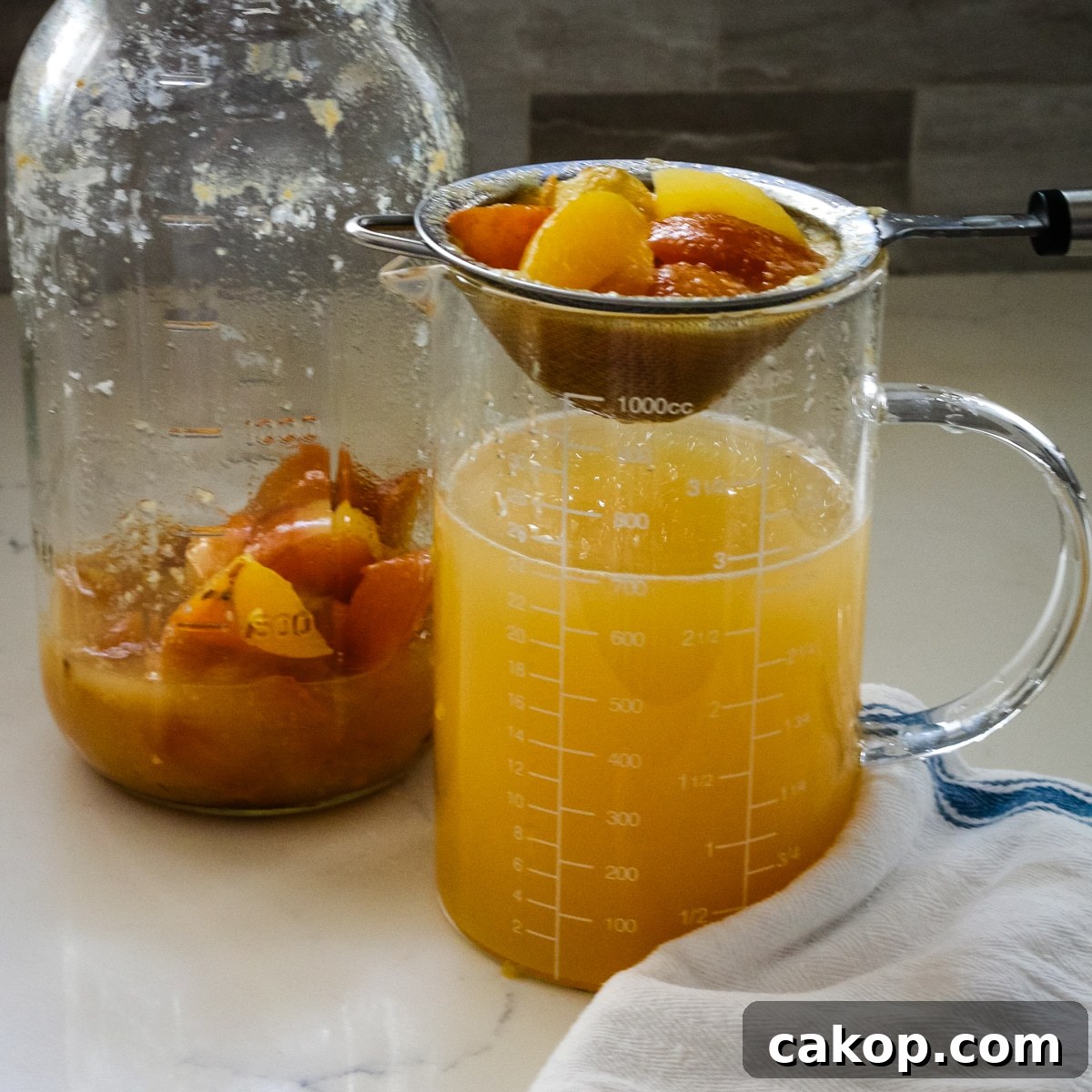
Fermentation Timeline
Stage 1 (alcohol phase): 2 weeks in a warm area (optimal 65–75°F / 18–24°C), stirring daily. Stage 2 (vinegar phase): 3–4 weeks or longer at room temperature until the acidity and flavor develop to your liking. The aroma and color will change as yeasts and bacteria convert sugars into alcohol and then acetic acid.
Helpful Tips
- Use ripe apples or scraps: whole apples or peels and cores both work.
- Keep everything submerged: use a fermentation weight or small jar to prevent mold.
- Stir daily during stage 1: oxygen helps the yeasts and prevents surface growth.
- Taste as it matures: stage 2 can take 3–4 weeks or longer; stop when it’s tangy enough for you.
ACV Recipe Essential Tools
No special equipment needed. Basic tools make this easy:
- Half-gallon jar (wide-mouth mason jar works well)
- Fermentation weight (optional but helpful to keep solids submerged)
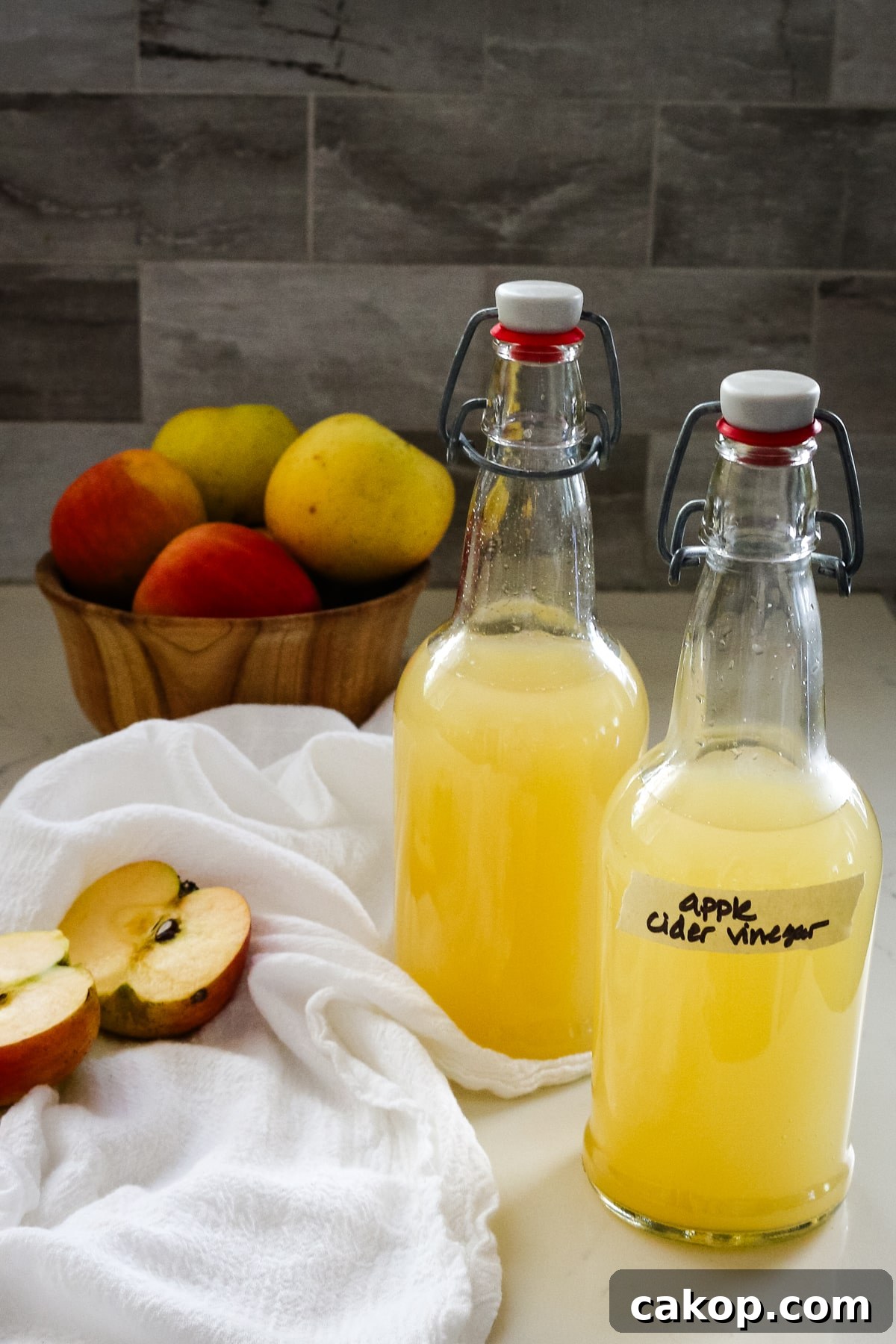
Use homemade apple cider vinegar in dressings, quick pickles, marinades, and cleaning solutions.
Frequently Asked Questions
Store in an airtight bottle in the fridge for up to 12 months, or keep it at room temperature to allow further flavor development. Always use clean utensils when handling.
Fermentation takes time. A warm spot and daily stirring help, but rushing the process can harm flavor and safety. Patience yields better, balanced vinegar.
If you see fuzzy, raised mold (black, blue, green, or white), discard the batch. Kahm yeast, which appears as a thin, flat film, is harmless — skim it off and continue fermenting.
Looking for more healthy basics? Try fermenting vegetables, making homemade mayo, or rendering beef tallow.
Printable Recipe
Apple Cider Vinegar Recipe
Anya @ Prepare & Nourish
Ingredients
- 5–6 whole apples (or cores and peels from 8–10 apples)
- 1/4 cup granulated sugar
- 4 cups water
Instructions
- Coarsely chop the apples and fill a clean jar about 2/3–3/4 full.
- Sprinkle 1/4 cup granulated sugar over the apples.
- Add 4 cups water, ensuring apples are submerged. Stir to dissolve the sugar.
- Cover loosely with a kitchen towel or coffee filter and secure with a band. Use a weight if pieces float.
Ferment — Stage 1: Alcohol Phase
- Set the jar in a warm, dark place for 2 weeks. Stir daily to prevent mold and encourage even fermentation. You may detect a cider or slight alcohol aroma.
Strain & Ferment — Stage 2: Vinegar Phase
- Strain out solids and compost them. Return the liquid to the jar, cover, and let it ferment at room temperature for another 3–4 weeks or until tangy.
- When it tastes vinegary, bottle it in a sealed container and store in the fridge or at room temperature to continue aging.
Notes
Yield: Approximately 1 quart.
Storage: Keep in a sealed bottle in the fridge for up to 12 months or store at room temperature to continue flavor development. Use clean utensils to avoid contamination.
Helpful tips:
- Use ripe apples or saved peels and cores.
- Keep apple pieces submerged using a weight to prevent mold.
- Stir daily during stage 1 for even fermentation.
- Taste periodically during stage 2 until it reaches the desired acidity.
Nutrition
Nutrition information is an estimate provided for convenience and should not replace professional advice.
©Prepare and Nourish • Content and photographs are copyright protected. Sharing is encouraged but please don’t copy the full recipe to other sites.
Leave a comment and share a photo if you try this apple cider vinegar. Thank you!