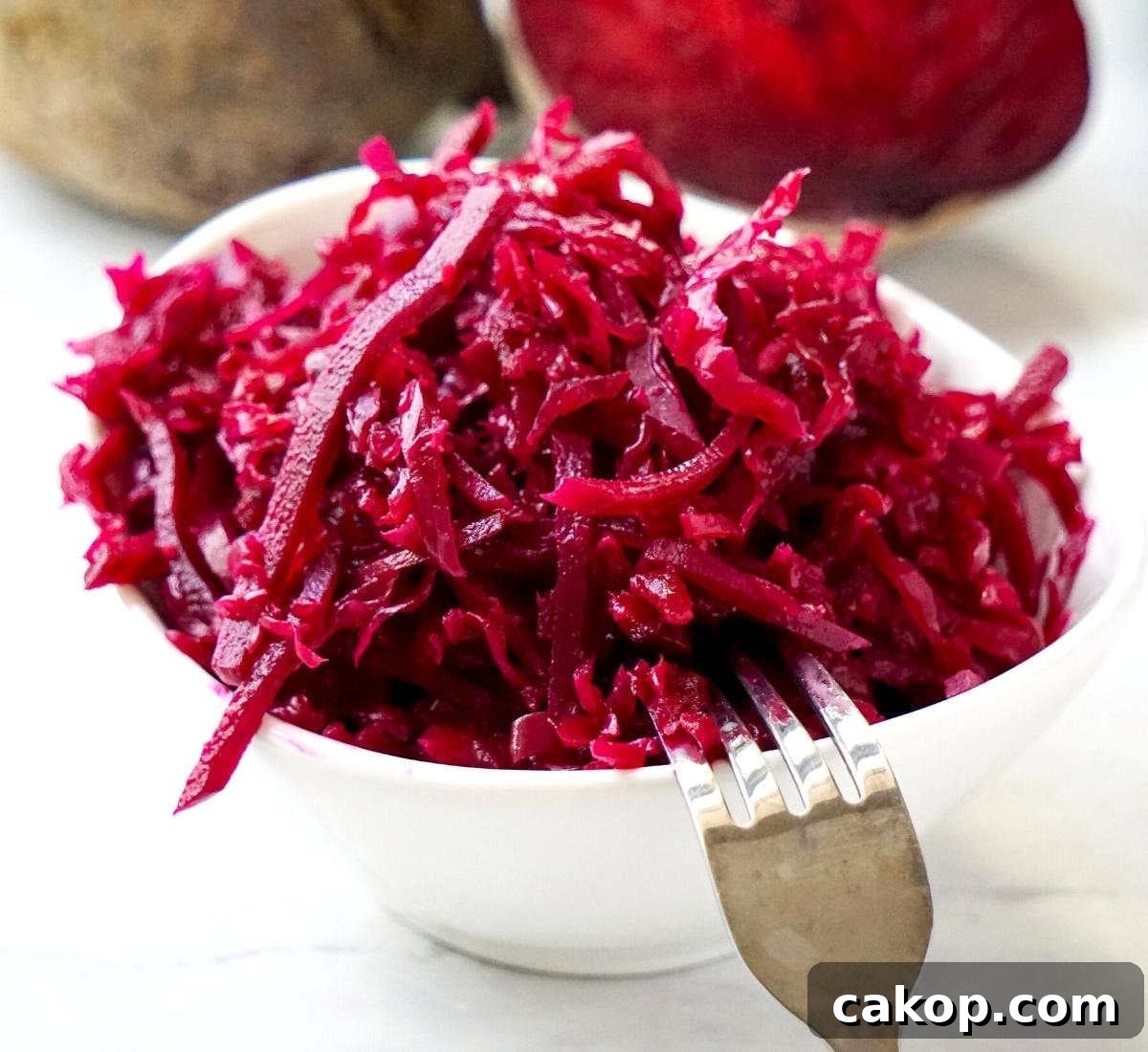
Looking for a fermented beet recipe? This fermented beet sauerkraut recipe uses raw beetroot combined with cabbage (white or red), apple, ginger and garlic. The resulting beetroot kraut is versatile — add it to salads, top avocado toast, or serve alongside roasted meats and fish.
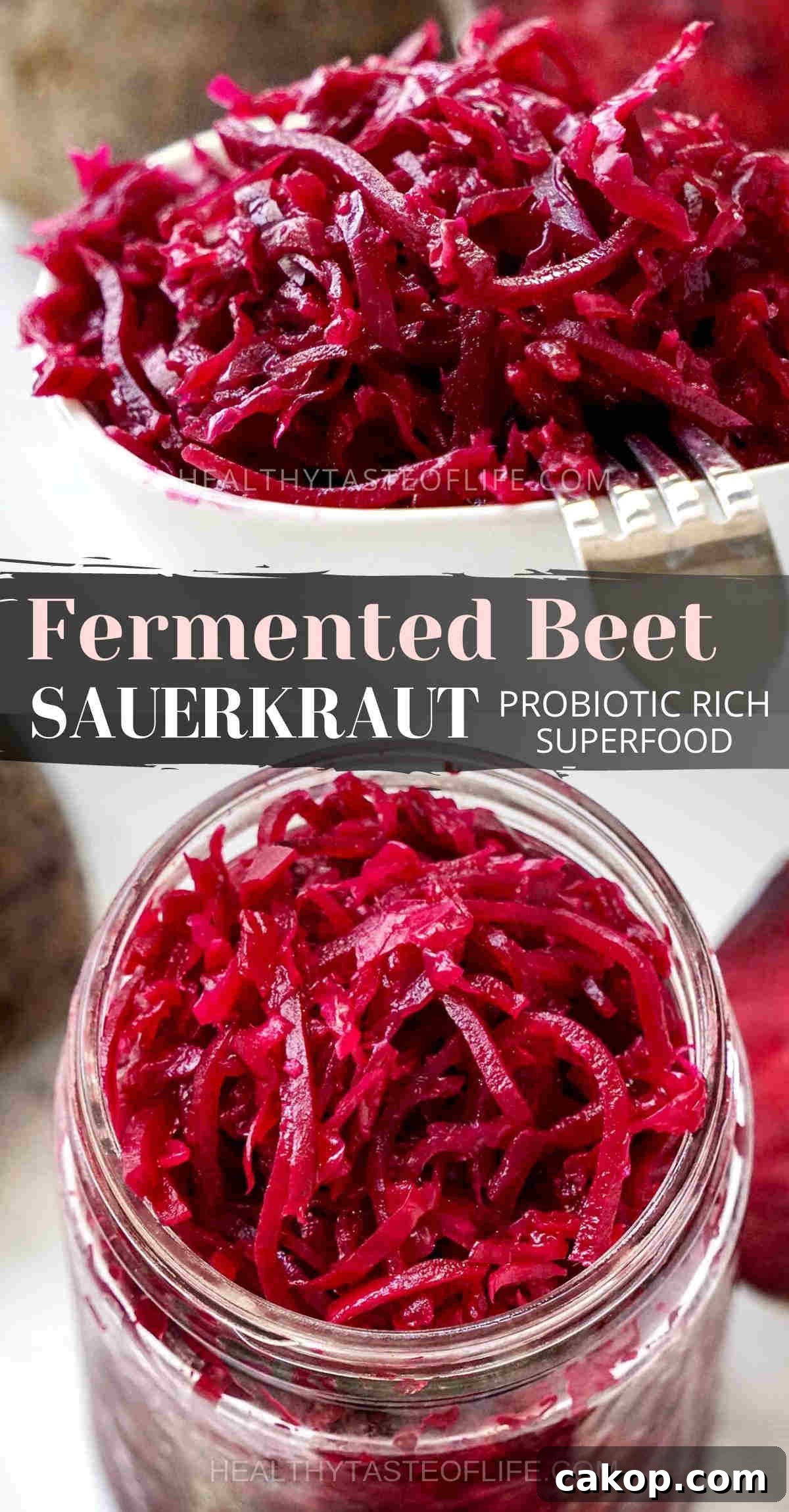
Fermented Beet And Cabbage Recipe
The earthy sweetness of beets pairs beautifully with the crisp, mild cabbage. Ginger and garlic add a warming, savory kick and bring additional health benefits, while apple lends a touch of natural sweetness. The finished sauerkraut is crunchy, tangy and deeply flavorful.
I fell in love with this beet and cabbage combination the first time I tried it. Compared to a plain red cabbage sauerkraut, this version has more depth and an earthier profile thanks to the beets.
Beets are a staple in my kitchen: I use them in salads, crackers, creamy soups, smoothies and juices, so fermenting them felt like a natural next step.
If you enjoy fermented vegetables, try other recipes such as fermented cauliflower, shaved carrot salad, dill pickles (no vinegar), fermented fish, or fermented watermelon.
Beet Sauerkraut Benefits
This beet sauerkraut is especially useful during cold and flu season. Fermentation creates probiotics, and the addition of ginger and garlic makes the kraut immune-supporting, nutrient-dense and good for balancing gut flora. Properly fermented vegetables also help improve digestion and nutrient absorption.
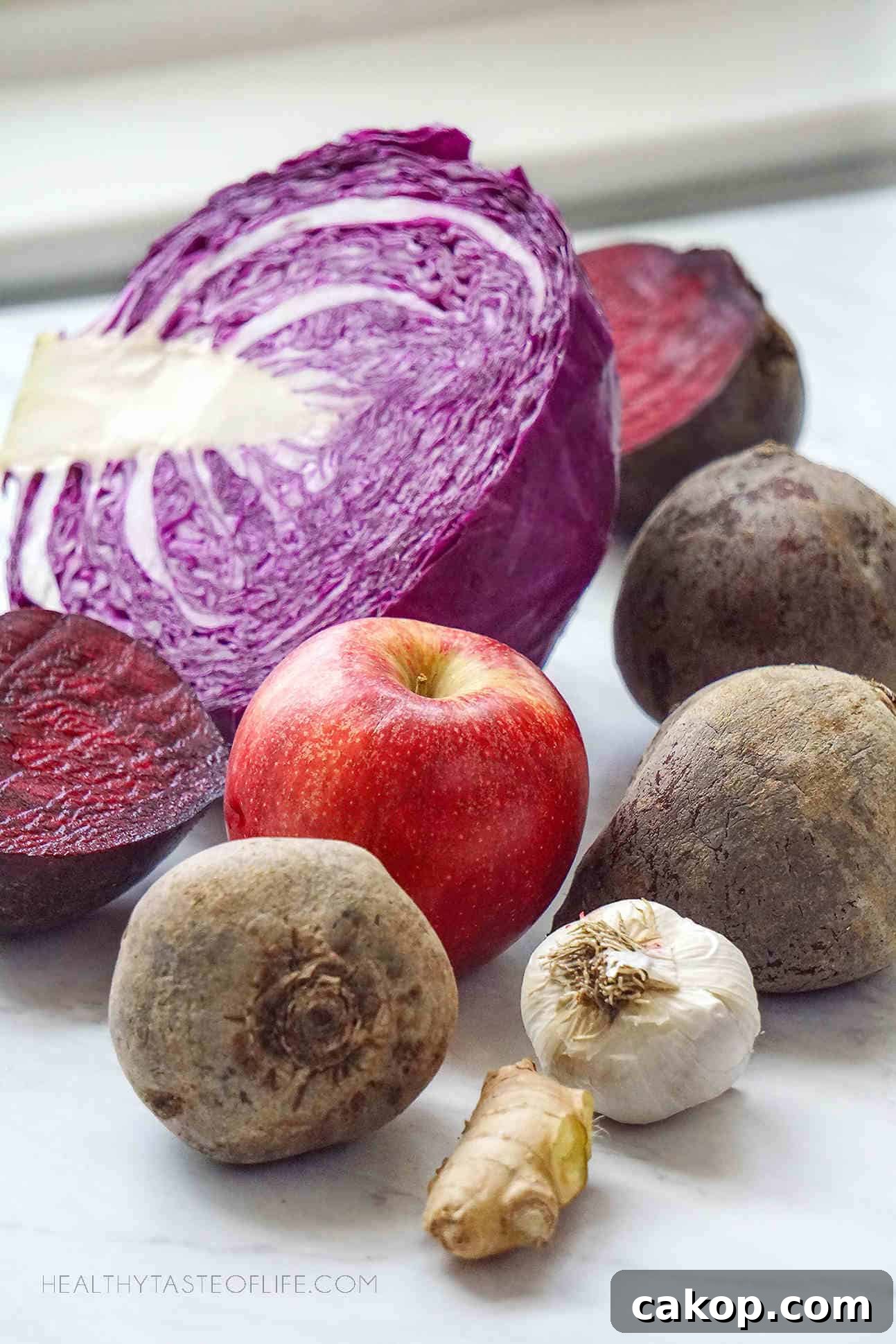
Beets offer anti-inflammatory and detoxifying properties and contain essential minerals and vitamins. Fermentation helps make those nutrients more available and preserves the vegetables without vinegar.
Beets alone are very sweet and can create an overactive fermentation that spoils quickly. Mixing beets with lower-sugar cabbage prevents excessive activity and yields a stable, long-lasting kraut. Aim for about 55–60% cabbage to 35–40% beets, leaving a small percentage for spices and extras.
For flavor and added antimicrobial benefits, I recommend garlic and ginger — they complement the beets and cabbage while bringing their own healthful properties.
Fermented Beets Benefits
Probiotic-rich fermented foods support the gut by improving microbial balance, reducing inflammation, and enhancing nutrient absorption. The gut–brain connection also means fermented foods can indirectly support mental well-being.
Fermenting beets preserves their antioxidants, vitamins and minerals while the beneficial bacteria break down sugars and starches into acids that act as natural preservatives. Lacto-fermented beets retain powerful antioxidant, anti-inflammatory and detoxifying effects and can be gentle on digestion — useful for those with autoimmune or digestive concerns.
- Nutrition boost: Beets supply minerals like magnesium, potassium, copper and iron, vitamins A, B and C, plus fiber. Fermentation enhances the bioavailability of many of these nutrients.
- Preservation: Long-term fermentation preserves nutrients while using the bacteria and their byproducts instead of vinegar or sugar.
- Digestive support: Lacto-fermented beets help improve intestinal flora and enzyme activity, supporting digestion and gut health.
How To Make Red Cabbage And Beet Sauerkraut
Fermenting is simple: you need salt, optional brine, and a way to keep the vegetables submerged during fermentation.
Follow these step-by-step instructions:
1. Prepare the beets. Shred or slice them to your preferred thickness. Thinner pieces will be crisper and release more juice, and uniform size helps even fermentation.
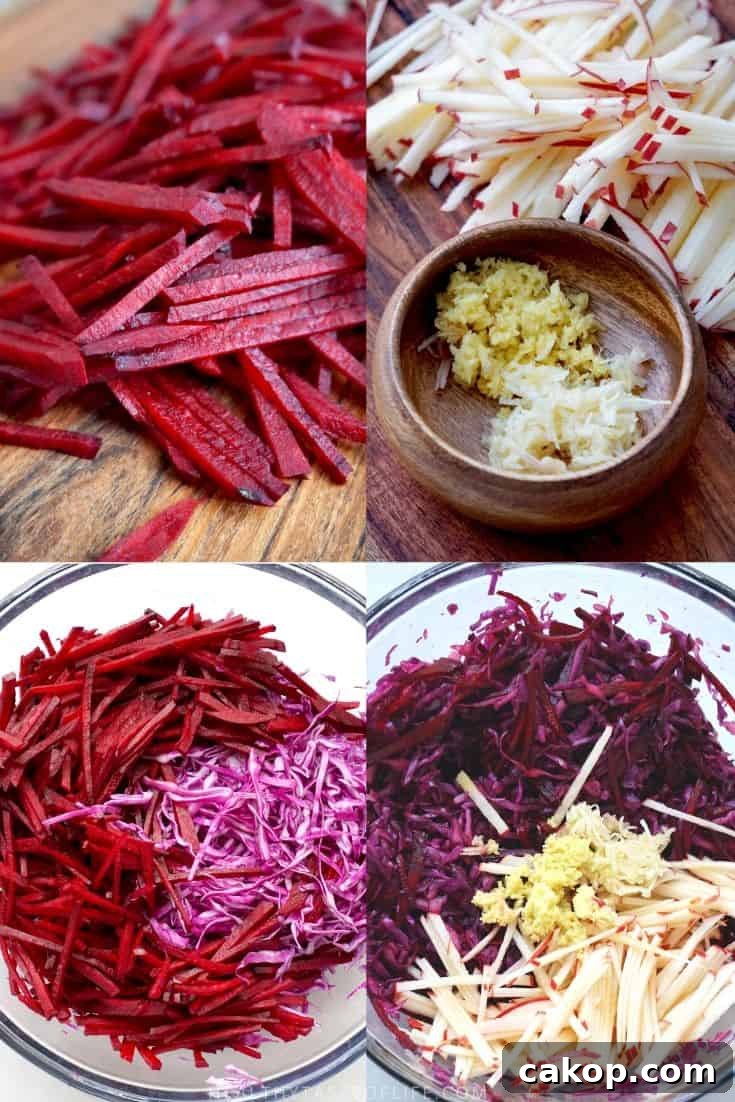
A mandoline or a sharp knife works well for julienning. Grate the ginger and garlic finely so they distribute evenly.
- 2. Place shredded cabbage in a large bowl so you can work it with your hands. Set beets and apple aside.
- 3. Add salt. Use an unrefined coarse salt and measure carefully — I use slightly less than the common guideline.
- 4. Massage the cabbage for about 3 minutes until it softens, then rest 10 minutes to release more juice.
- 5. Add the julienned beets, massage 2 more minutes, then mix in apple, ginger and garlic evenly.
- 6. Pack the mixture into clean jars. Use a fermentation kit or a regular glass jar with a weight to keep everything submerged. Leave 1–2 inches of headspace.
- 7. Press the mixture down firmly so it sits under its brine. If liquid is insufficient, add a brine made from 1 tsp sea salt dissolved in 1 cup water.
- 8. Cover loosely with a plate or coffee filter secured with a rubber band to allow gases to escape while minimizing contamination.
- 9. Culture at room temperature (65–70°F preferred) for 3–5 days or longer to taste. When satisfied, refrigerate to slow fermentation; the kraut will keep for months, even up to a year.
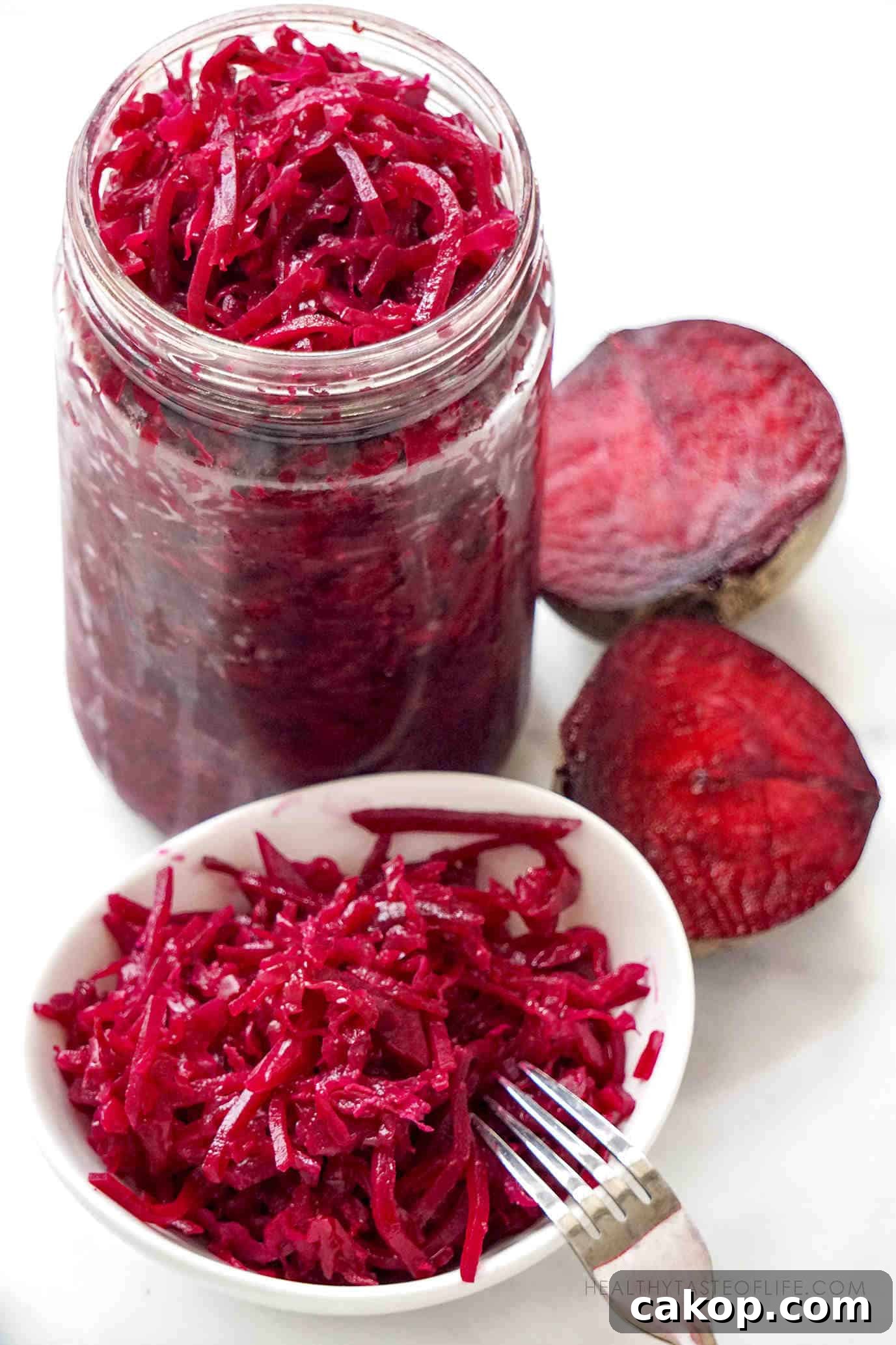
After a few days of fermentation the kraut develops its characteristic tang and texture.
Tips For Fermenting Beets And Cabbage
- Salt ratio: A common rule is about 1.5 tsp salt per pound (500 g) of vegetables; adjust slightly to taste. When fermenting sweet vegetables like beets, include enough low-sugar cabbage to balance the fermentation.
- Cleanliness: Keep hands and utensils clean to avoid introducing unwanted bacteria.
- Fermentation time: Leave at room temperature a minimum of 3 days and up to three weeks. Longer fermentation yields a tangier kraut.
- Allow gas to escape: During early fermentation carbon dioxide can cause liquids to overflow. Don’t seal jars tightly; instead use a loose lid or plate and place a tray underneath to catch spills.
- Watch for mold: Any parts exposed to air can develop mold. Check daily and push material back under the brine if necessary.
Serve The Beetroot Kraut With:
- Cabbage fritters (fried or baked)
- Chicken liver patties
- Butternut squash casserole (vegan)
- Twice baked sweet potatoes
- Potato fritters with crab meat
- Quinoa poke bowl with shrimp
- Gluten-free Swedish meatballs
More Beetroot Recipes You Might Like
- Simple beetroot salad with walnuts, prunes and avocado (vegan)
- Pumpkin and beetroot salad (vegan)
If you make this red cabbage and beetroot sauerkraut, please leave a comment or star rating — your feedback helps other readers.
Print Recipe
Fermented Beets + Cabbage (Probiotic Rich Beetroot Sauerkraut) Recipe
30 minutes
5 days
5 days 30 minutes
Ingredients
- 2 medium raw beets – (about 4 cups, julienned — about 3.5 lb / 1600 g)
- 1 small cabbage head – (about 5 cups, shredded — about 3.5 lb / 1600 g)
- 1 inch ginger – peeled and finely grated or minced
- 3 cloves garlic – peeled and finely grated or minced
- 1 medium apple – any variety
- 2 tbsp sea salt
Instructions
Prepare The Veggies
-
Wash the cabbage thoroughly and remove any discolored outer leaves. Wash and peel the beets, and peel the ginger and garlic. The apple does not need to be peeled.
-
Julienne the beets and apple and thinly shred the cabbage. Finely grate the ginger and garlic so they distribute evenly.
Toss With Salt
-
Place the shredded cabbage in a large bowl. Sprinkle with salt and massage the cabbage until it softens (about 3 minutes). Let it sit 10 minutes to release more liquid.
-
Add the julienned beets and massage for 2 more minutes. Mix in the apple, ginger and garlic until well combined.
Place In Jars To Ferment
-
Pack the mixture into clean mason jars, pressing down firmly so the brine rises and covers the vegetables. Leave 1–2 inches (2.5–5 cm) of headspace.
-
If the brine does not fully cover the vegetables, add a salt brine made from 1 tsp sea salt dissolved in 1–1.5 cups water. Use a cabbage leaf and a clean weight to hold everything submerged.
-
Cover loosely with a plate or loose lid and place the jar on a plate to catch any overflow. Keep in a shaded spot at room temperature for 3–5 days. Bubbles should appear within a day. Skim any surface scum if needed.
-
After about 5 days, move the jar to the refrigerator to slow fermentation. The kraut will develop more complexity the longer it ferments; it can usually be eaten after 10 days.
Notes
Tips For Making Beetroot Sauerkraut
- Use gloves to avoid staining your hands with beet juice. If staining occurs, rub with lemon and salt before washing.
- You can use a small canning jar as a weight to keep the ferment submerged.
- Garlic can make the aroma stronger during the first days of fermentation, but that settles down once refrigerated.
- Salt guideline: About 1.5 tsp salt per pound (500 g) of vegetables is common; adjust to taste.
- Fermentation window: Leave at room temperature at least 3 days and up to three weeks. Longer fermentation means a tangier kraut.
- During early fermentation, gas and liquid can overflow. Use a loose cover and place a tray under the jar to catch spills.
- Anything exposed to air can grow mold; check daily and press solids back under the brine if needed.
Nutrition
|
Calories: 165kcal
Nutrition information is an estimate provided by an online calculator.
©HealthyTasteOfLife. Content and photographs are copyright protected and need prior permission to use. Sharing the link to this recipe is encouraged and appreciated.